

NASA Prepares to Send Astronauts Around the Moon Again With Artemis II
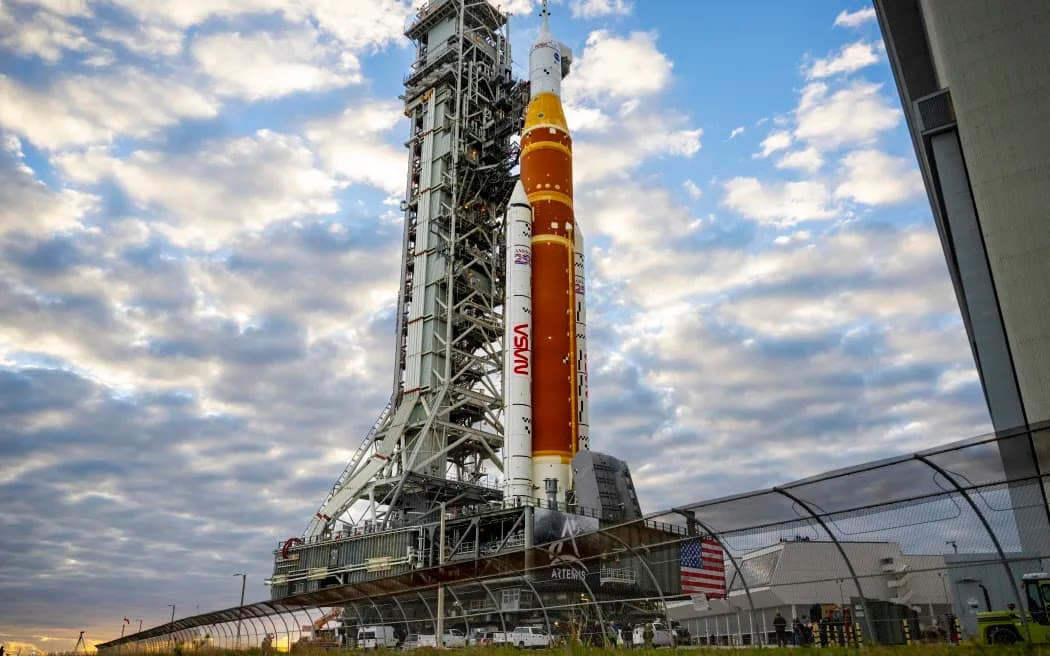
The rollout itself is a ritual of modern exploration. The SLS rocket, towering and white against the Florida sky, crept along the crawlerway at less than a mile per hour, a massive machine inching toward the launch pad with the patience of something that understands its own significance. Engineers walked alongside it, monitoring every vibration, every shift, every whisper of machinery. By the time it reached Launch Pad 39B, the same ground once used by Apollo, the symbolism was impossible to ignore: after decades confined to low‑Earth orbit, human spaceflight is stretching outward again.
Artemis II will carry four astronauts — Reid Wiseman, Victor Glover, Christina Koch, and Jeremy Hansen — on a ten‑day journey that loops around the Moon and returns to Earth. They will not land; that task belongs to Artemis III. But their mission is no less profound. They will test life‑support systems, communications, navigation, and the deep‑space performance of Orion — all essential steps toward building a sustained human presence beyond Earth. Their spacecraft will travel farther from home than any crewed vehicle has gone since the Apollo era, reaching a point thousands of kilometers beyond the lunar far side before curving back toward the Pacific Ocean.
Inside NASA’s control rooms, the atmosphere is a blend of precision and anticipation. Teams are preparing for the wet dress rehearsal — a full simulation of launch day, complete with fueling, countdown procedures, and the choreography of hundreds of specialists working in unison. Every valve, every sensor, every line of code must perform flawlessly. Artemis II is not just a mission; it is a gateway. It will validate the systems that will one day carry astronauts to the lunar surface, to the Moon’s south pole, and eventually to Mars.
The Artemis program represents a shift in how humanity approaches space. It is not a single leap but a sustained campaign — a return to the Moon not as a destination, but as a beginning. The rollout of the SLS and Orion for Artemis II marks the moment when decades of planning, engineering, and political will converge into a single, towering reality. The rocket now stands on its pad, illuminated by floodlights, waiting for the tests that will clear it for flight. And somewhere in that glow is the quiet promise that soon, humans will once again watch the Earth rise over the lunar surface.
Editorial Disclaimer
This article summarizes publicly available information about NASA’s Artemis II mission. It is intended for informational and editorial purposes only and should not be interpreted as technical guidance, aerospace engineering advice, or a definitive prediction of mission outcomes. Spaceflight plans and schedules may change as testing continues. Readers should consult NASA’s official communications for the most current mission details.