
2026 Set to Become a Landmark Year for Global Space Exploration
The year 2026 is beginning to take shape as one of those rare moments when humanity collectively looks upward and decides to push farther than it ever has before. Across continents and space agencies, a quiet but powerful coordination is unfolding — a convergence of missions, telescopes, landers, and deep‑space probes that together form the most ambitious wave of exploration in decades. Scientists are already calling it a turning point, a year when our understanding of the universe may expand more dramatically than at any time since the dawn of the space age.
What makes 2026 extraordinary is not a single mission, but the sheer density of them. New space telescopes are preparing to open their eyes to the cosmos, instruments so sensitive they will be able to survey billions of galaxies, mapping the structure of the universe with a precision that once belonged only to theory. These observatories will peer into the earliest epochs after the Big Bang, trace the invisible scaffolding of dark matter, and search for the faint signatures of worlds orbiting distant stars. Each telescope is a time machine, a window into eras we have never seen.
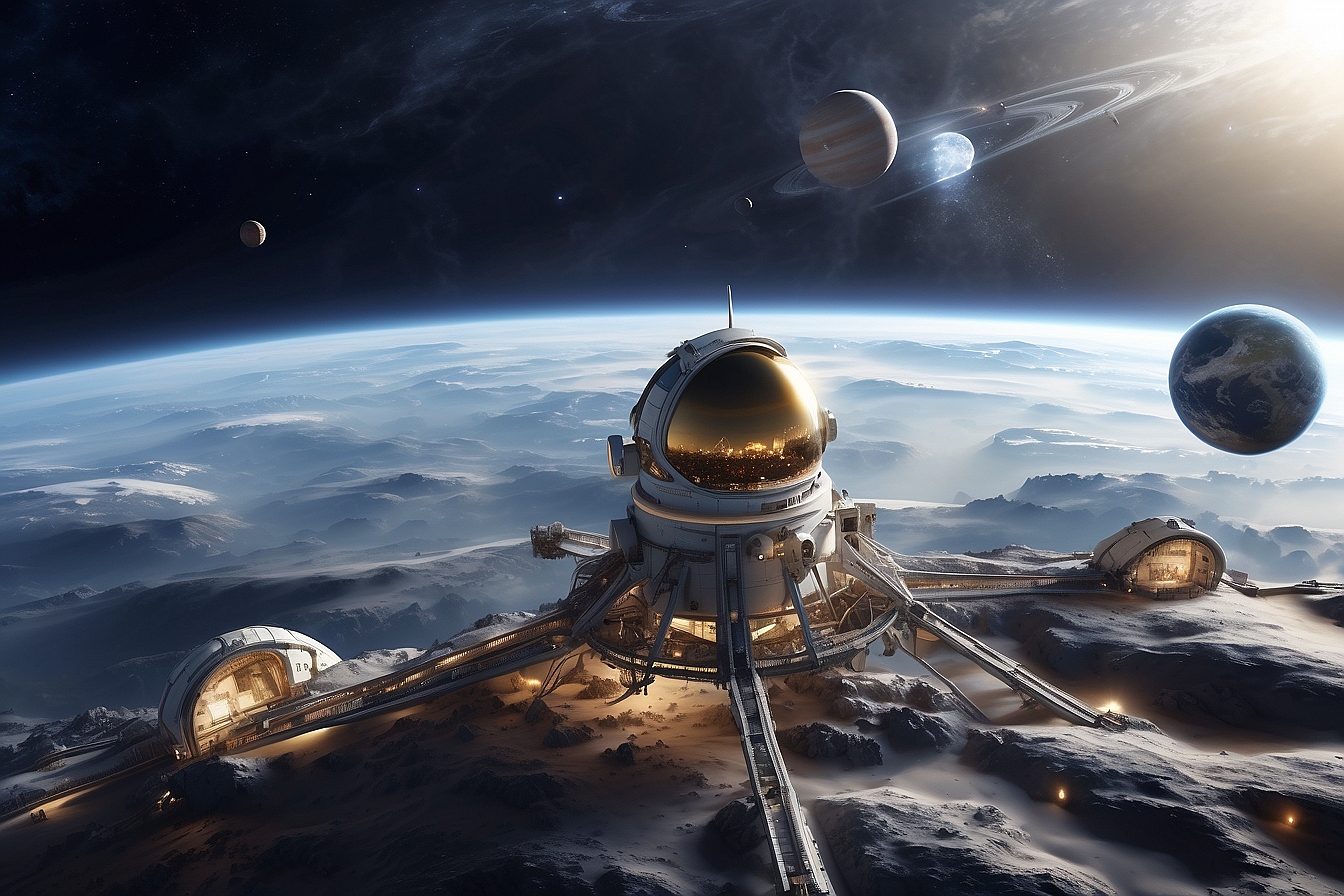
At the same time, the Moon is becoming crowded again — not with flags and footprints, but with sustained programs designed to build a long‑term human presence. Lunar landers, rovers, and orbiters from multiple nations are scheduled to launch throughout the year, each carrying experiments that will test the technologies needed for living and working on another world. The Moon is no longer a symbol of past triumphs; it is the staging ground for the next chapter of exploration, a place where humanity will learn how to survive beyond Earth.
Beyond the Moon, a fleet of robotic explorers is preparing to slip into the deeper shadows of the solar system. Some will search for habitable environments on icy moons, probing the oceans beneath their frozen crusts. Others will study asteroids that preserve the chemical fingerprints of the solar system’s birth. A few will venture toward exoplanetary systems, carrying instruments designed to detect the atmospheric hints of life — oxygen, methane, or the subtle chemical imbalances that biology tends to create.
What ties all these missions together is a shift in mindset. Space exploration is no longer a series of isolated national efforts; it is becoming a global tapestry, woven from shared data, shared risks, and shared ambitions. Scientists speak of 2026 with a kind of reverence, aware that the discoveries made this year could redefine our place in the cosmos. It is a moment when technology, curiosity, and international cooperation align, opening doors that have been closed for billions of years.
If the predictions hold true, 2026 will not simply be remembered as a busy year for spaceflight. It will be remembered as the year humanity widened its field of vision — the year we stepped into a larger universe and began to understand, with new clarity, how small we are and how far we can still go.
Editorial Disclaimer
This article summarizes publicly available information about upcoming international space missions. It is intended for informational and editorial purposes only and should not be interpreted as scientific guidance, aerospace engineering advice, or a definitive prediction of mission outcomes. Spaceflight plans and schedules may change as agencies refine their programs. Readers should consult official communications from space agencies for the most current details.