

Why do people spend more with credit cards than cash?
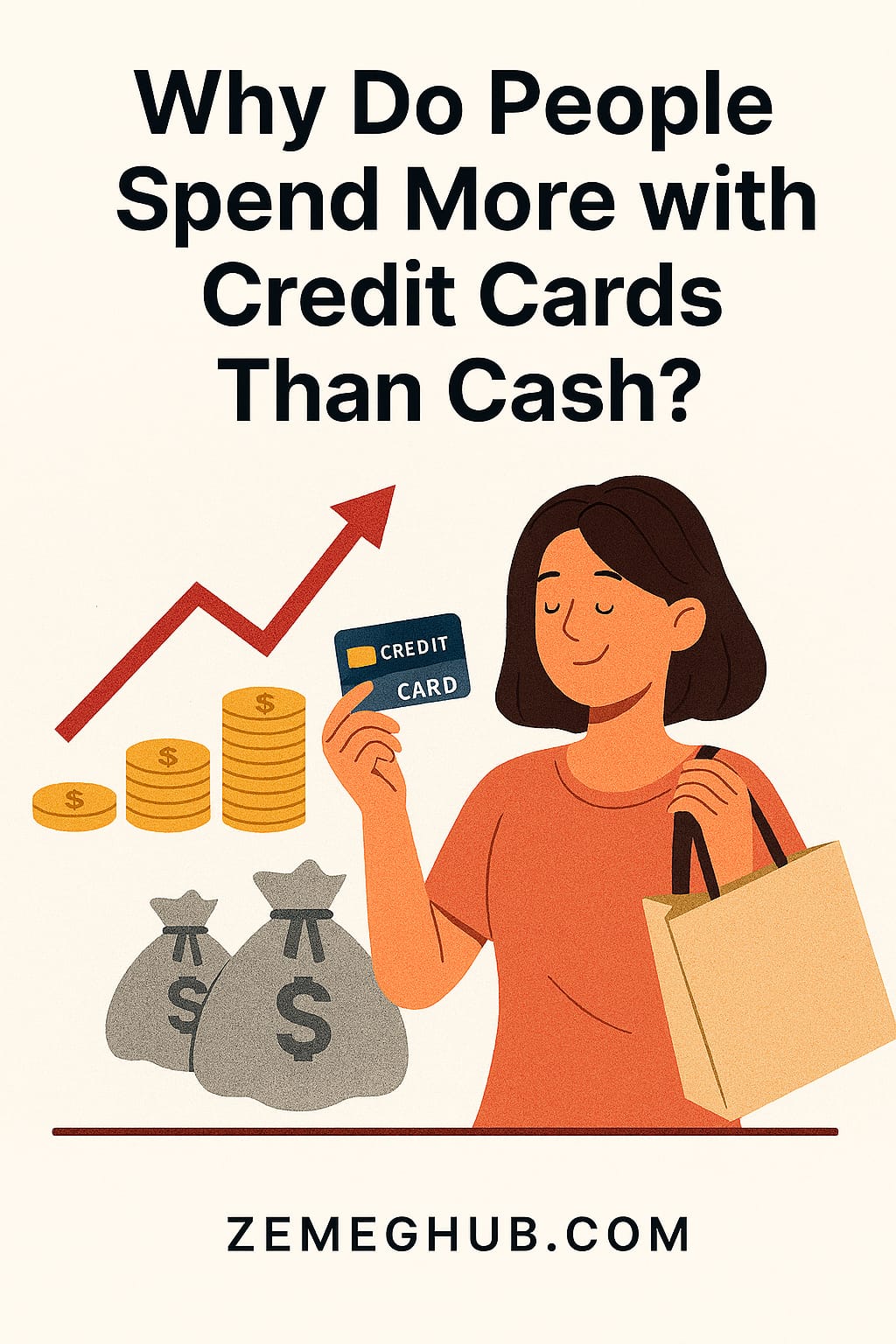
People tend to spend more with credit cards than cash because the psychological pain of parting with money is reduced, purchases feel less “real,” and the convenience of plastic encourages impulsive behavior.
Let’s imagine two scenarios. In the first, you walk into a store, pick up a jacket, and hand over € /,usd100 in cash. You feel the crisp bills leave your hand. There’s a moment of hesitation. In the second, you swipe your credit card, hear a beep, and walk out with the same jacket. No physical money changed hands. No immediate consequence. Just a number on a screen.
That difference—between tangible and intangible—is at the heart of why people spend more with credit cards.
The Psychology of Spending
When you pay with cash, your brain registers a loss. Studies show that parting with physical money activates the pain centers in the brain. It’s a visceral experience. But with credit cards, that pain is dulled. You’re not losing money in the moment—you’re deferring it. That delay makes the transaction feel less significant, even if the cost is the same.
This phenomenon is known as payment decoupling. The act of buying is separated from the act of paying. You get the reward now, and the pain later. That’s a powerful motivator for spending more.
The Illusion of Affordability
Credit cards also create a sense of expanded purchasing power. You might not have usd/€500 in your wallet, but your card says you do. That illusion makes it easier to justify bigger purchases, even if you wouldn’t make them with cash.
And because credit cards often come with rewards programs, cashback, or points, spending can feel like a game. You’re not just buying—you’re earning. That adds another layer of psychological incentive.
Impulse and Convenience
Credit cards are fast. Swipe, tap, done. That speed removes friction from the buying process. There’s no counting bills, no waiting for change. It’s seamless—and that seamlessness fuels impulse buying.
In fact, research shows that people are twice as likely to make impulse purchases with credit cards than with cash. They also tend to tip more generously, spend more on luxury items, and feel less guilt about splurges.
The Hidden Cost
Of course, the bill eventually arrives. And if you don’t pay it off in full, interest charges kick in. That’s where the real cost of credit card spending shows up. But by then, the emotional high of the purchase has faded, and the debt feels like a separate problem.
This disconnect is why credit card debt is so common—and why financial experts often recommend using cash for budgeting. When you see your money physically disappear, you’re more likely to think twice.
In the end, credit cards change how we experience money. They make spending feel easier, faster, and less painful. But that ease comes with a price—one that’s often paid later, in interest, regret, or financial stress.