

The Reinvention of Public Transit: How AI Will Transform the Way Cities Move
Public transit is entering a new era where intelligence, adaptability, and AI reshape the way cities move.
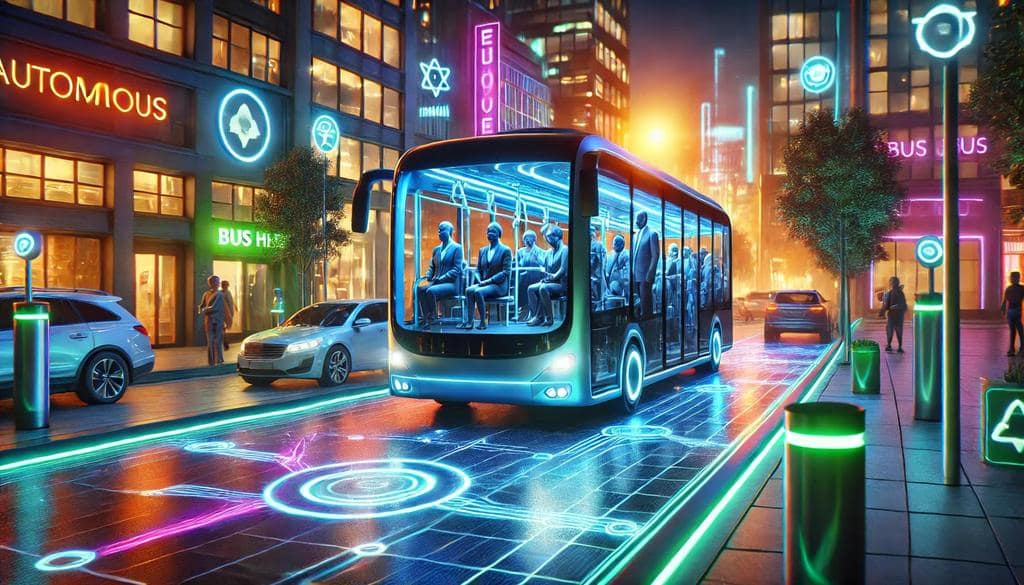
There is a moment when a city begins to move with a different rhythm—quieter, smoother, more intentional. Public transit, once defined by fixed schedules and rigid routes, is entering a new era shaped by intelligence, adaptability, and the subtle choreography of millions of daily journeys. The reinvention of public transit is not just a technological shift; it is a reimagining of how cities breathe.
For decades, buses and trains followed predetermined paths, indifferent to the ebb and flow of human movement. They arrived whether the city needed them or not. They waited when no one was there. They crowded when demand surged. But in the emerging landscape of intelligent mobility, public transit becomes something alive—responsive, aware, and deeply connected to the pulse of the city.
Imagine a bus that knows when you need it. A train that adjusts its frequency as crowds rise and fall. A transit network that senses congestion, reroutes itself, and balances passenger flow with mathematical grace. This is not science fiction. It is the natural evolution of a world where infrastructure and intelligence merge. As explored in “https://www.zemeghub.com/2026/02/smart-roads-how-intelligent.html“the rise of smart roads, the foundations of mobility are becoming cognitive. Public transit is simply the next layer of that transformation.
In this new era, AI becomes the silent conductor of urban movement. Algorithms analyze real‑time data from sensors, vehicles, and passengers. They predict demand before it forms. They optimize routes not once a year, but every second. They transform transit from a static system into a living network that adapts to the city’s heartbeat.
Autonomous buses glide through streets with calm precision, communicating with traffic lights, crosswalks, and other vehicles. Trams synchronize their movement with pedestrian flows. Metro systems adjust their intervals dynamically, reducing wait times and energy consumption. Transit becomes not just efficient, but harmonious.
But the reinvention of public transit is not only technological—it is profoundly human. When mobility becomes predictable and fluid, stress dissolves. Commutes become moments of quiet rather than frustration. Cities become more accessible, more equitable, more connected. The distance between neighborhoods shrinks. Opportunities expand. Public transit becomes not just a service, but a form of social infrastructure.
Energy plays its part as well. Electric fleets reduce noise and pollution. Charging stations integrate seamlessly into depots and stations. Renewable energy powers entire networks. Transit becomes a partner in sustainability, not a burden on it.
And yet, the most transformative change is the shift in how we experience movement. Public transit in the age of AI is not about speed—it is about flow. It is about creating a city where movement feels natural, where systems anticipate rather than react, where the journey becomes as meaningful as the destination.
The reinvention of public transit is already unfolding. It is in the adaptive bus routes emerging in modern cities. It is in the predictive algorithms guiding metro systems. It is in the quiet hum of electric fleets replacing diesel engines. It is in the invisible intelligence that shapes the way we move.
As cities evolve, public transit will become the backbone of a new mobility ecosystem—one that is intelligent, sustainable, and deeply human. A system that moves with us, not against us. A system that listens, learns, and adapts. A system that transforms the act of traveling into something beautifully simple again.