

The Night Europe Looked at Itself: Inside the Brussels Summit on a Changing World
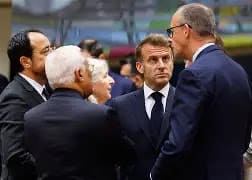
Brussels has a particular stillness in winter — a kind of muted tension that settles over the city when decisions with long shadows are being made. Tonight, that stillness feels heavier. European leaders have gathered behind closed doors for a summit that was never meant to happen this soon, called in urgency after Trump’s shifting stance on Greenland and the sudden threat of tariffs that rattled the continent only days ago. What was supposed to be a routine meeting has become something closer to a reckoning.
The question on the table is not simply how to respond to U.S. pressure. It is deeper, more existential: What does Europe become in a world where the ground keeps moving beneath it? Ursula von der Leyen’s words in Davos echo through the corridors of the Council building — “the world has changed permanently.” It was not a warning. It was a diagnosis. And tonight, the leaders of Europe are trying to understand what that change demands of them.
Inside the summit, the atmosphere is tense but strangely unified. The usual divisions — north and south, east and west, federalists and skeptics — feel muted by the scale of the moment. Trump’s unpredictability has done what years of internal debate could not: it has forced Europe to think as a single body, not a collection of competing nerves. The Greenland episode, dismissed by some as political theater, has become a symbol of something larger — the realization that Europe can no longer rely on the stability of old alliances.
Outside, journalists wait in the cold, refreshing their feeds, listening for footsteps, for a door opening, for any sign that the talks have shifted. Inside, leaders speak in low voices, weighing words that could shape the next decade. A coordinated response to Washington is on the table — not confrontational, but firm, a reminder that Europe is not merely reacting to the world but trying to shape it.
The summit will stretch into the night. It always does when the stakes are high. And somewhere between the speeches, the drafts, the whispered negotiations, something else is happening — Europe is looking at itself with unusual clarity. The continent that once defined global order is now learning how to navigate a world where certainty is a luxury and alliances are no longer guarantees.
Tonight, Brussels is not just hosting a meeting. It is hosting a moment of self‑recognition.