

Trump Media Acquires Nuclear‑Fusion Startup TAE Technologies — A New Front Opens in the Global Energy Race
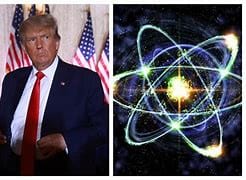
In the high‑stakes world of advanced energy research, few technologies carry as much promise—or as much geopolitical weight—as nuclear fusion. For decades, it has hovered at the edge of possibility, a scientific horizon shimmering with the hope of clean, virtually limitless power. Now, that horizon has shifted dramatically. Trump Media, a company better known for its presence in digital platforms and communications, is moving into the heart of the fusion race with its acquisition of TAE Technologies, a California‑based startup valued at more than six billion dollars.
The announcement sent a ripple through both the tech and energy sectors. TAE Technologies has long been one of the most ambitious players in the fusion landscape, pursuing a unique approach to plasma confinement and attracting investment from major scientific and industrial partners. Its work has always carried the aura of a moonshot—bold, expensive, and potentially transformative. The idea that a media company would step into this arena seemed, at first, almost surreal. But beneath the surprise lies a deeper strategic logic.
Fusion is no longer just a scientific pursuit. It has become a battleground of national ambition, a race where technological leadership translates directly into geopolitical influence. The United States and China are now the two dominant forces pushing toward commercial fusion, each pouring resources into research, infrastructure, and private‑sector partnerships. Whoever reaches viable fusion first will shape the global energy order for generations. The acquisition of TAE Technologies signals that this race is expanding beyond traditional energy giants and government labs into new corporate territories.
For Trump Media, the move represents a dramatic shift in identity. It is a declaration that the company intends to play a role in the next era of technological disruption, stepping far outside the boundaries of its original industry. The acquisition positions the company at the intersection of science, national strategy, and long‑term energy innovation. It also places TAE’s research under a new umbrella—one that may bring fresh capital, new partnerships, and a different kind of public visibility.
For TAE Technologies, the acquisition could accelerate its path toward commercialization. Fusion research is notoriously expensive, requiring not only scientific expertise but also deep financial endurance. A parent company with significant resources and a desire to expand into frontier technologies may offer the stability and momentum needed to push the science closer to reality. The fusion community has watched for years as breakthroughs inch forward; now, the pace may quicken.
But the implications stretch far beyond corporate strategy. Fusion has become a symbol of technological sovereignty. China has invested heavily in its own fusion reactors, building experimental facilities that rival the most advanced in the world. The United States, meanwhile, has relied on a mix of government labs and private startups to maintain its edge. The acquisition of TAE Technologies underscores how deeply fusion has entered the realm of national competition. It is no longer just a scientific dream—it is a strategic asset.
The global energy landscape is shifting. Fossil fuels are losing their dominance. Renewables are rising but still face limitations. Fusion, if achieved, would rewrite the rules entirely. It would reshape economies, redefine power structures, and alter the trajectory of climate and industry. The fact that a media company is now stepping into this arena is a sign of how wide the race has become, and how high the stakes truly are.
The acquisition marks a new chapter in the fusion story—one where unexpected players enter the field, where technology and strategy intertwine, and where the future of energy becomes a contest not just of science, but of vision.