
The Foundation of London — From Myth to Empire
Every great city begins with a story, and London’s story begins in the shimmering space where myth and memory blur. Long before its skyline rose in glass and steel, before its streets pulsed with the weight of empire, London existed first as an idea—a whispered tale carried through centuries, shaped by poets, chroniclers, and conquerors.
The oldest legends trace London’s birth to a figure who never walked the earth, yet lives vividly in Britain’s imagination: Brutus of Troy. According to medieval lore, he was a wandering exile, a descendant of Aeneas, who sailed west after the fall of Troy. Guided by prophecy, he reached a mist‑covered island at the edge of the world and founded a city on the banks of a winding river. He named it Troia Nova, New Troy, a place destined for greatness. Over time, the name softened, reshaped by tongues and centuries, until it became London. It is a myth, but one that reveals something essential: the desire to root the city in ancient heroism, to give its foundations the glow of destiny.
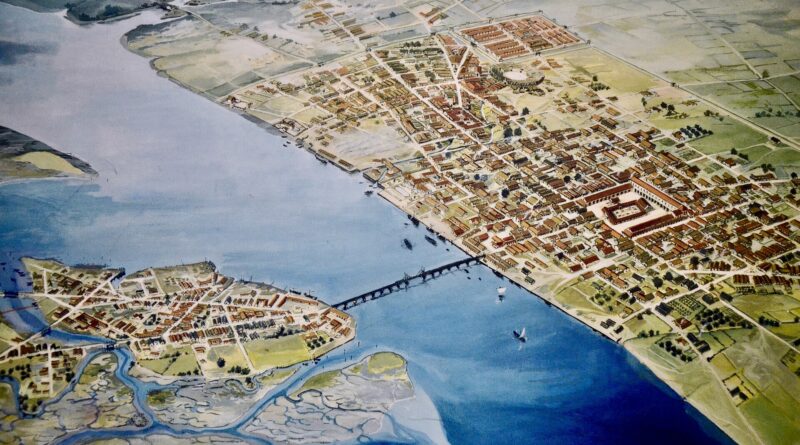
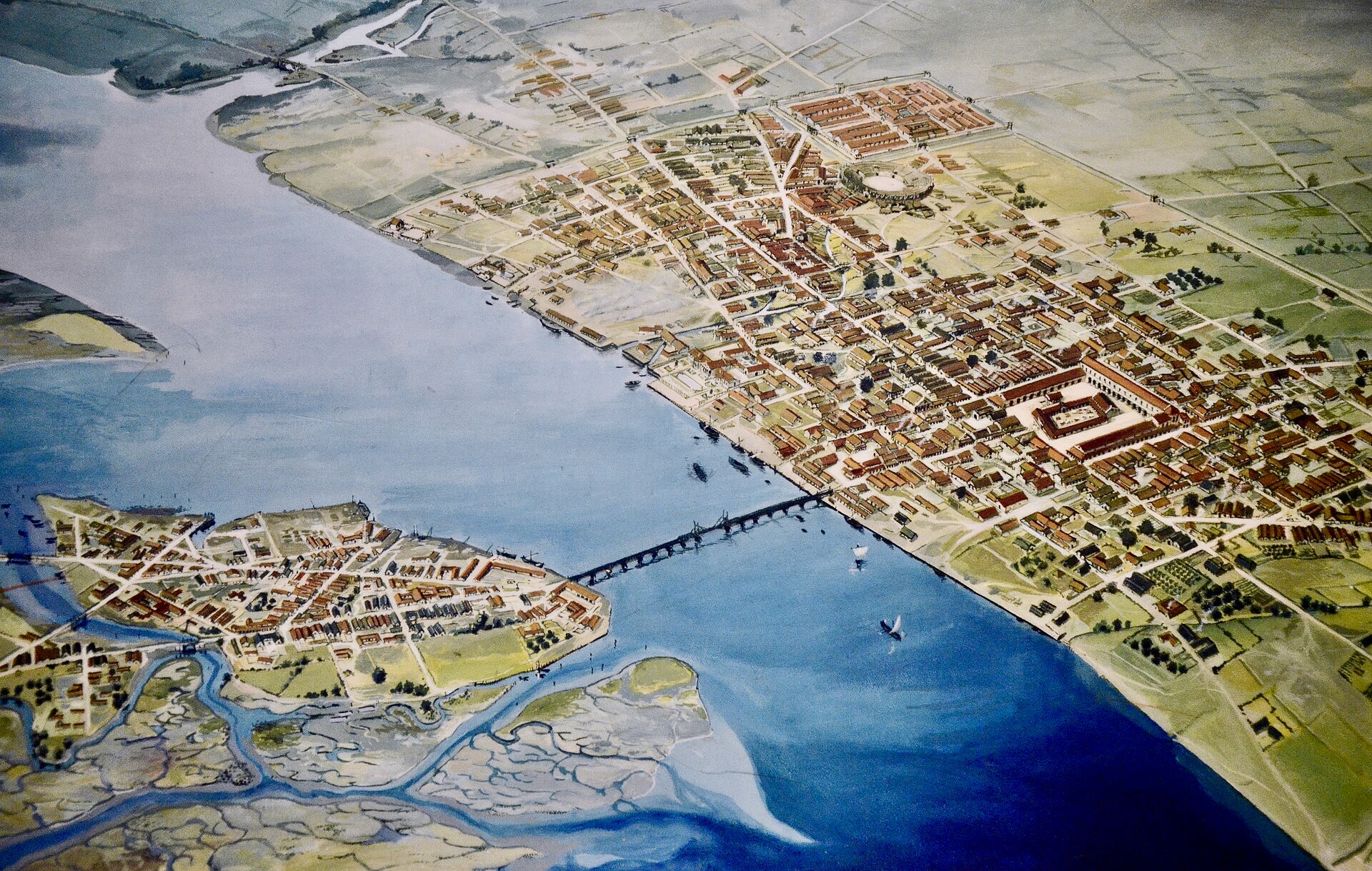
Archaeology tells a different story—one quieter, but no less powerful. Long before Rome’s legions arrived, the Thames valley was dotted with settlements, trading posts, and sacred sites. The river was a lifeline, a mirror of the sky, a route for goods and stories. But the London we recognize began in AD 47, when the Romans built a bridge across the Thames and established Londinium, a bustling commercial hub that grew with astonishing speed. Markets filled with traders from across the empire. Streets were laid in straight Roman lines. Walls rose to protect a city that had become too valuable to lose. When fire destroyed it, the Romans rebuilt it stronger. When rebellion threatened it, they fortified it further. Londinium became a symbol of imperial order at the edge of the known world.
Yet even Rome could not hold the city forever. When the empire withdrew, London fell into silence. Its grand buildings crumbled. Grass overtook its streets. For a time, it seemed the city might vanish into the river mist. But London has always been a place that refuses to disappear. Anglo‑Saxon settlers revived it. Viking raids scarred it. Norman conquerors reshaped it with stone and ambition. Each era layered new identities over the old, turning the city into a palimpsest of power, faith, and reinvention.
By the medieval period, London had become something more than a settlement. It was a magnet for merchants, a stage for kings, a crucible of ideas. Its river carried ships from distant shores. Its markets buzzed with languages from across Europe. Its streets echoed with the footsteps of scholars, rebels, and dreamers. The city grew not through conquest alone, but through the restless energy of people who believed that London was a place where fortunes could be made and destinies rewritten.
When the age of empire dawned, London transformed again—this time into the beating heart of a global network. Goods, wealth, and influence flowed through it like tides. The city became a symbol of power so vast it seemed almost mythic, echoing the ancient stories of Brutus and Troy in a new, modern form. London was no longer just a city; it was an idea carried across oceans, a name spoken in ports and capitals around the world.
Today, London stands as a mosaic of all its pasts—mythic, Roman, medieval, imperial. Its foundations lie not in a single moment, but in the accumulation of centuries, in the stories told and retold, in the resilience that allowed it to rise again and again from fire, invasion, and upheaval. The city’s origin is not a fixed point but a journey, beginning in legend and unfolding into empire.
London was born from myth, shaped by conquest, and crowned by history. And even now, it continues to reinvent itself, carrying its ancient stories into the future with the same quiet determination that has defined it from the very beginning.