

When the Cosmos Speaks: The Mystery of Gravitational Waves That Pass Through Us
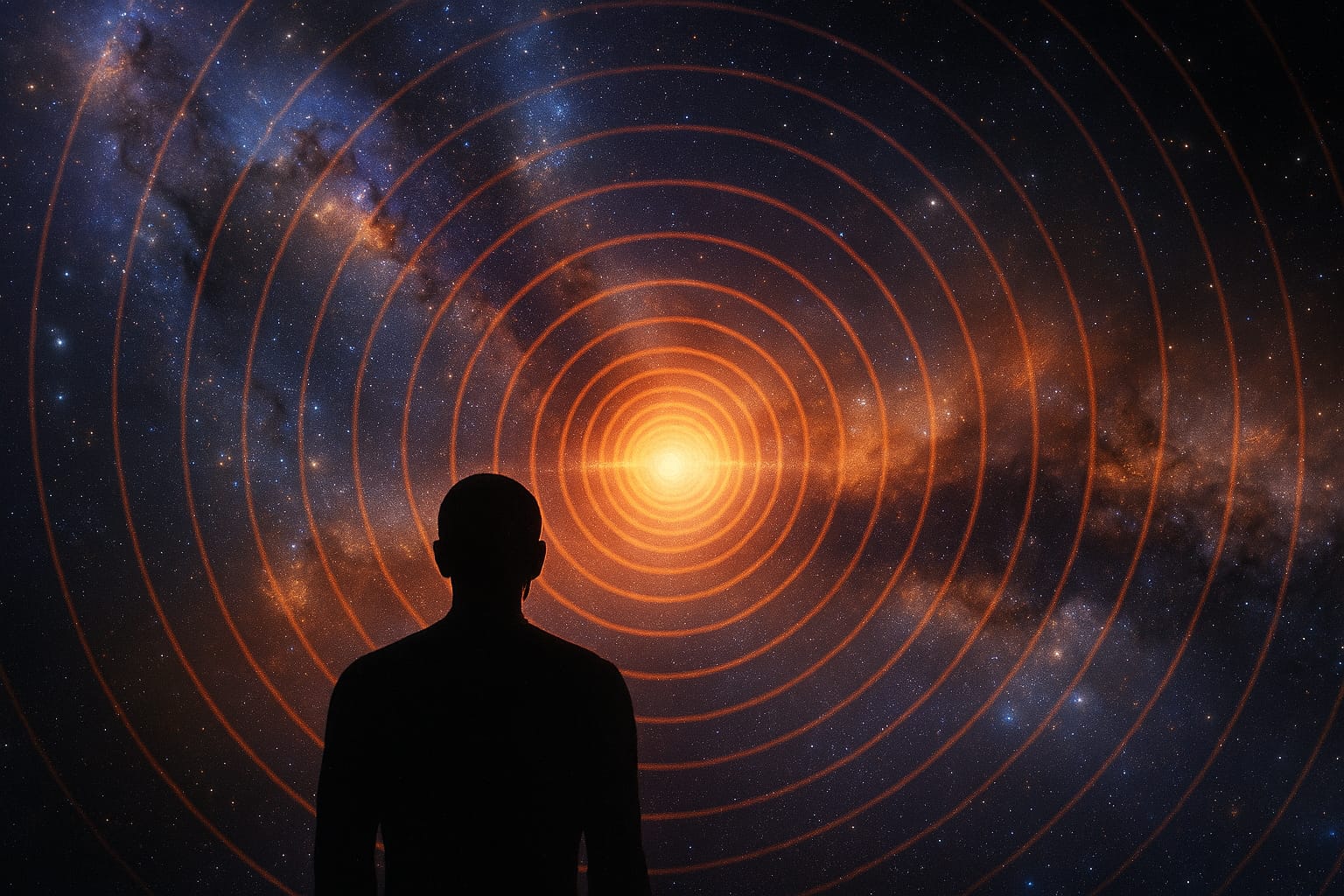
There are moments when the universe whispers—not in words, but in ripples. Invisible tremors that stretch space itself, passing through our bodies, our cities, our memories. These are gravitational waves, the silent echoes of cosmic events so powerful they bend reality.
They were first predicted by Einstein, but for a century remained theoretical ghosts. Then, in 2015, the LIGO observatory heard them—waves born from the collision of two black holes over a billion light-years away. It was as if the cosmos had finally spoken, and we were listening.
But what does it mean to be touched by the universe?
Every time a gravitational wave passes, it subtly alters the fabric of space. You and I become part of a cosmic rhythm—our atoms momentarily stretched and compressed, dancing to the beat of ancient cataclysms. These waves carry stories: of stars that died in fire, of neutron stars spiraling into oblivion, of the birth of black holes.
And yet, we feel nothing.
That paradox—of being profoundly affected by something we cannot sense—is what makes gravitational waves so haunting. They remind us that reality is deeper than perception, that the universe is not silent, only subtle.
Scientists now use these waves to map the unseen: to detect black holes, study dark energy, and even peer into the earliest moments after the Big Bang. Each detection is a message, a cosmic postcard from a place we’ll never visit, but can still understand.
So next time you look up at the night sky, remember: the cosmos is speaking. Not in light, but in motion. Not in sound, but in gravity. And somewhere, deep inside your cells, the universe has already passed through you.