

Guardians of Trust: A Journey Through the World’s Lowest-Risk Financial Havens
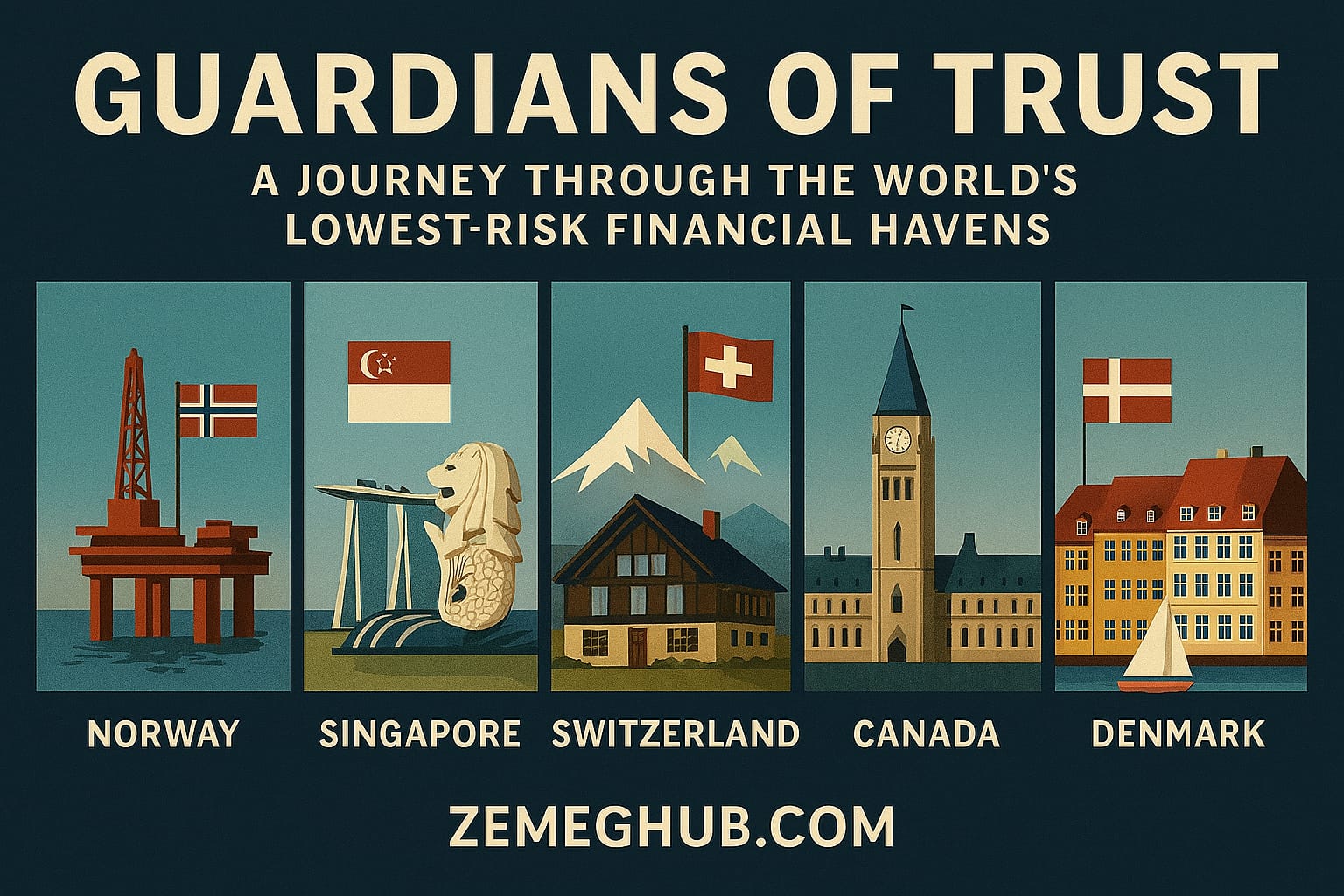
In an era defined by economic turbulence, geopolitical uncertainty, and the relentless pulse of global markets, there remain a handful of nations that seem to defy gravity. These are not utopias, nor are they immune to crisis—but they have cultivated something rare and precious: trust. Not blind trust, but the kind earned through decades of transparency, fiscal discipline, and institutional resilience.
This is not a ranking. It’s a narrative. A journey through the quiet strength of countries whose financial systems have become sanctuaries—places where risk is not eliminated, but anticipated, managed, and absorbed with grace.
Norway: Oil, Wisdom, and the Architecture of the Future
Norway’s wealth is not just buried beneath the North Sea—it’s embedded in its foresight. The country’s sovereign wealth fund, one of the largest and most transparent in the world, transforms oil revenues into long-term security for its citizens. Every barrel extracted is a promise kept for future generations.
But Norway’s true strength lies in its governance. Low public debt, near-zero corruption, and a deeply rooted trust in institutions make it a model of financial prudence. Risk here is not feared—it’s forecasted, budgeted, and neutralized with surgical precision.
Singapore: The Orchid That Blooms in Concrete
Singapore is a paradox: a tiny island with outsized influence. In the heart of Asia, it has built a fortress of financial stability, earning AAA ratings across the board. Its regulatory frameworks are rigorous, yet its innovation ecosystem thrives.
What makes Singapore exceptional is its ability to balance control with creativity. It’s a place where multiculturalism meets meritocracy, and where urban planning is not just functional—it’s visionary. Financial risk is minimized not by chance, but by design.
Switzerland: The Whisper That Calms the Storm
Switzerland doesn’t shout. It doesn’t need to. Its reputation for neutrality, precision, and discretion has made it a global safe haven—not just for capital, but for confidence. Swiss banks are among the most secure in the world, and its fiscal policies are as measured as its timepieces.
Here, trust is a quiet contract between citizen and state. It’s not declared—it’s demonstrated, day after day, in the way data is handled, laws are enforced, and promises are kept.
Canada: The Gentle Giant of Resilience
Canada’s strength is subtle. It doesn’t dominate headlines, but it consistently ranks among the world’s most stable economies. Its banking system is robust, its debt levels manageable, and its political climate calm.
What sets Canada apart is its diversity—not just cultural, but economic. From natural resources to tech innovation, it has built a portfolio of resilience. Financial risk is diluted by balance, and amplified by a culture of cooperation.
Denmark: Where Stability Is a Civic Art
Denmark is a masterclass in equilibrium. Its welfare system is generous, but not reckless. Its tax policies are transparent, and its public debt is kept in check. Citizens trust their institutions because those institutions trust them back.
In Denmark, financial risk is low because social cohesion is high. It’s a place where responsibility is shared, and where transparency isn’t a buzzword—it’s a way of life.
Beyond the Numbers: The Human Factor
What unites these nations is not just their AAA ratings or their fiscal surpluses. It’s their culture of trust. They don’t just manage money—they manage expectations, emotions, and relationships. They communicate clearly, plan wisely, and adapt swiftly.
In a world where volatility is the new normal, these guardians of trust remind us that stability is not a luxury—it’s a choice. A choice made in boardrooms, parliaments, and living rooms. A choice that echoes in every policy, every budget, and every handshake.