

US Revives Cold War-Era Naval Base to Establish World’s Largest Weapons Hub Near China
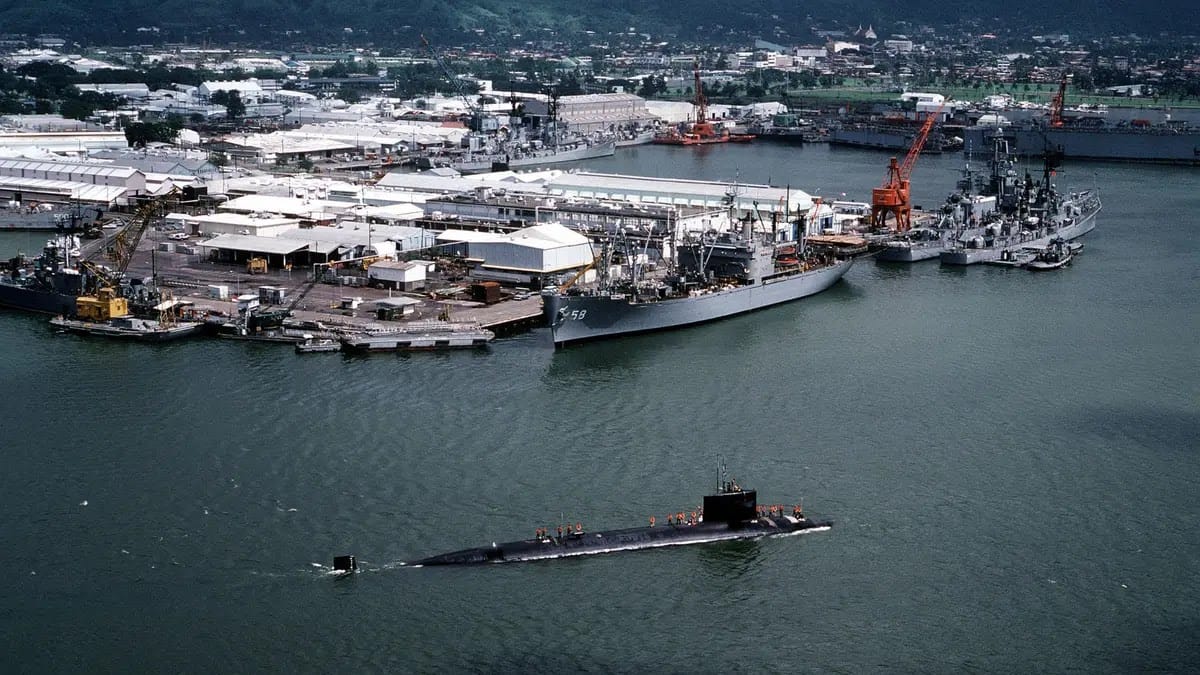
In a bold strategic move aimed at countering China’s growing military influence in the Indo-Pacific region, the United States has announced plans to revive a Cold War-era naval base and transform it into the world’s largest weapons manufacturing and logistics hub. This initiative marks a significant shift in U.S. defense posture, reflecting heightened geopolitical tensions and a renewed focus on deterrence and regional stability.
Strategic Location and Historical Significance
The base in question is located at Subic Bay in the Philippines, a site that once hosted the largest U.S. naval installation in Asia during the Cold War. Positioned just 55 miles northwest of Manila, Subic Bay offers a prime vantage point for monitoring and responding to developments in the South China Sea—a region fraught with territorial disputes and military build-up.
Subic Bay’s historical role as a linchpin of American naval operations underscores its strategic value. During the Cold War, it served as a critical logistics and repair hub for U.S. forces operating in Southeast Asia. Its revival signals a return to forward-deployed capabilities in a region increasingly dominated by Chinese maritime expansion.
A New Era of Military Infrastructure
The transformation of Subic Bay is being spearheaded by a partnership between the U.S. government and private sector entities, including Cerberus Capital Management, which has invested in redeveloping the former Hanjin shipyard—now renamed Agila Subic. The site will host advanced shipbuilding facilities, weapons manufacturing plants, and logistical support systems capable of sustaining large-scale military operations.
The new hub is expected to produce and maintain a wide array of military assets, including naval vessels, missile systems, and unmanned platforms. It will also serve as a staging ground for joint exercises, humanitarian missions, and rapid response operations across the Indo-Pacific.
Geopolitical Implications
This development comes amid escalating tensions between the United States and China, particularly over issues such as Taiwan, freedom of navigation, and military modernization. By establishing a robust military presence near China’s periphery, the U.S. aims to reinforce its commitment to regional allies and deter potential aggression.
The revival of Subic Bay also aligns with broader U.S. efforts to diversify its military footprint in Asia. With China’s growing missile capabilities threatening traditional bases like Guam and Okinawa, the need for dispersed and resilient infrastructure has become increasingly urgent.
Regional Reactions and Strategic Calculations
The Philippines, under President Ferdinand Marcos Jr., has welcomed the initiative as part of a broader strategy to strengthen national defense and deepen ties with the United States. The move has been met with cautious optimism by other regional players, who view a stronger U.S. presence as a counterbalance to China’s assertiveness.
However, the development is likely to provoke strong reactions from Beijing, which has consistently opposed foreign military deployments near its borders. Chinese officials have warned that such actions could destabilize the region and undermine efforts to resolve disputes through diplomacy.
The revival of the Cold War-era naval base at Subic Bay marks a pivotal moment in U.S. military strategy. By establishing the world’s largest weapons hub near China, the United States is not only enhancing its operational capabilities but also sending a clear message about its resolve to uphold international norms and support its allies in the face of rising challenges.
As the Indo-Pacific becomes the epicenter of global strategic competition, the transformation of Subic Bay stands as a testament to the enduring importance of forward presence, infrastructure resilience, and alliance cooperation in maintaining peace and stability.