

The Economic Landscape of Europe in 2025: Ranking Nations by GDP (PPP)
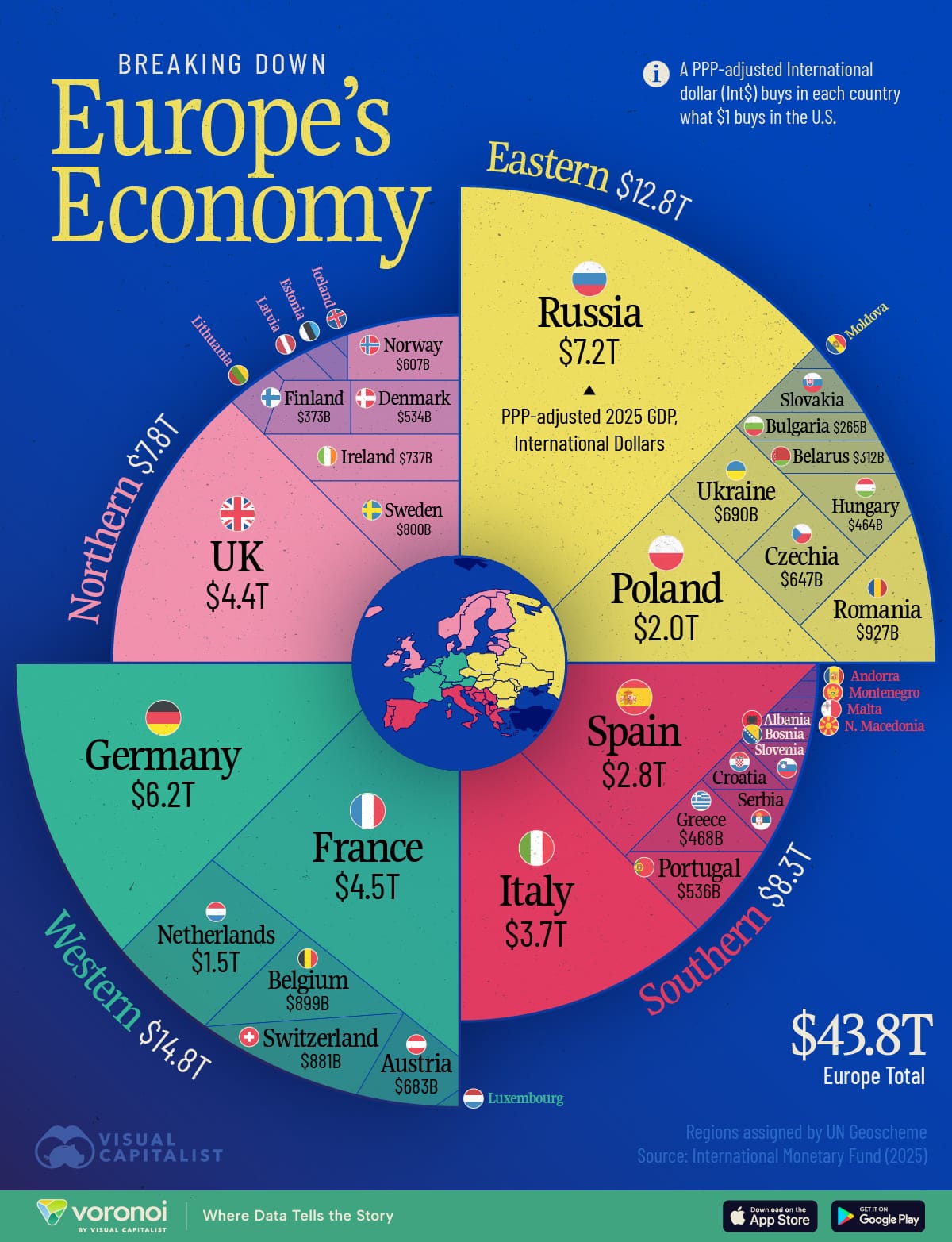
As Europe navigates the complexities of a post-pandemic recovery, shifting geopolitical dynamics, and technological transformation, the continent’s economic hierarchy continues to evolve. In 2025, the ranking of European economies by Gross Domestic Product (GDP) adjusted for Purchasing Power Parity (PPP) offers a revealing snapshot of regional strengths, disparities, and emerging trends.
Understanding GDP (PPP): A More Nuanced Metric
GDP measured by PPP accounts for differences in price levels across countries, offering a more accurate comparison of economic productivity and living standards. Unlike nominal GDP, which is influenced by exchange rates, PPP-adjusted figures reflect the actual purchasing power of citizens within their domestic economies. This metric is particularly useful in assessing the real size and influence of national economies within Europe.
The Top Tier: Economic Giants of Europe
In 2025, Russia leads the continent in PPP-adjusted GDP, with an estimated output of approximately Int$7.2 trillion. Despite facing international sanctions and internal challenges, Russia’s vast natural resources and domestic consumption continue to bolster its economic weight. Germany follows closely, maintaining its reputation as Europe’s industrial powerhouse with a PPP GDP of around Int$5.5 trillion.
France, the United Kingdom, and Italy round out the top five, each contributing significantly to Europe’s collective economic output. These nations benefit from diversified economies, strong service sectors, and robust consumer markets. Together, the top five economies account for more than half of Europe’s total PPP-adjusted GDP.
Regional Breakdown: Shifting Centers of Gravity
Europe’s economic map in 2025 reveals intriguing regional dynamics:
– Western Europe remains the largest contributor, with countries like Germany, France, and the UK driving growth through advanced manufacturing, finance, and technology.
– Eastern Europe, buoyed by Russia and increasingly dynamic economies like Poland and Romania, surpasses Northern and Southern Europe in PPP terms. This marks a significant shift, highlighting the growing influence of Eastern markets.
– Northern Europe, including Sweden, Norway, and Denmark, maintains high living standards and innovation-driven growth, though its aggregate PPP GDP is smaller.
– Southern Europe, led by Italy and Spain, continues to recover from past financial crises, showing steady improvement in productivity and investment.
Rising Stars and Economic Movers
Several mid-sized economies are making notable strides. Poland, for instance, has climbed the ranks with a PPP GDP nearing Int$1 trillion, driven by strong industrial output and EU investment. Romania and the Czech Republic also show impressive growth, reflecting successful integration into European supply chains and digital transformation.
Ireland, despite its small size, punches above its weight thanks to a thriving tech sector and favorable corporate tax policies. Meanwhile, the Netherlands and Switzerland maintain their positions through financial services and high-value exports.
Smaller Economies: Stability and Specialization
While countries like San Marino, Andorra, and Luxembourg have relatively small GDPs, they play specialized roles in Europe’s economic ecosystem. Luxembourg, for example, is a key financial hub, while San Marino benefits from tourism and niche manufacturing.
Challenges and Opportunities Ahead
Europe’s economic future hinges on several critical factors:
– Energy Transition: As the continent shifts toward renewable energy, nations investing in green infrastructure may gain competitive advantages.
– Digitalization: Economies embracing AI, automation, and digital services are likely to see accelerated growth.
– Demographic Shifts: Aging populations in Western Europe pose challenges to labor markets and social systems, while younger demographics in Eastern Europe offer potential for expansion.
– Geopolitical Stability: Continued tensions in Eastern Europe and global trade uncertainties could impact investment and growth trajectories.
A Continent in Flux
The 2025 ranking of European economies by GDP (PPP) underscores both the enduring strength of traditional powerhouses and the rising influence of emerging players. As Europe adapts to new realities, its economic landscape will continue to shift—shaped by innovation, resilience, and the collective ambition of its diverse nations.
This dynamic portrait of Europe’s economies offers not just a snapshot of current standings, but a glimpse into the continent’s evolving future.