What Is Deep Learning? A Narrative Journey Into Machines That Learn in Layers
Deep learning is the quiet evolution of artificial intelligence, where machines learn through layers of abstraction until meaning slowly emerges from complexity.
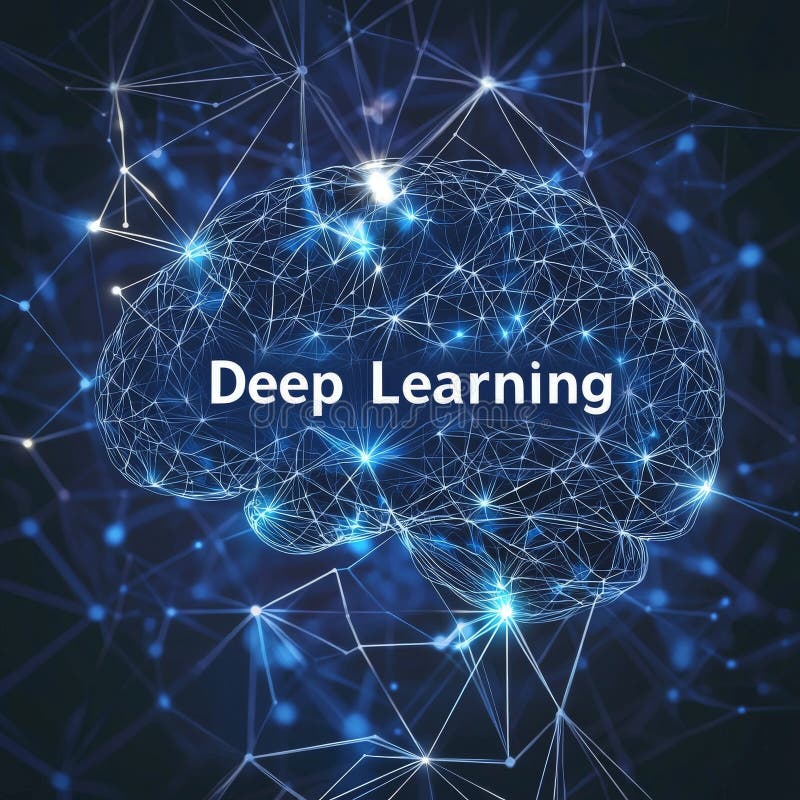
There is a strange beauty in the way a machine learns. Not the mechanical precision we once imagined, but something far more organic, almost biological. Deep learning is the moment when artificial intelligence stops behaving like a simple tool and begins to resemble a living system—layered, adaptive, and quietly evolving beneath the surface of its own complexity.
To understand deep learning, you must first imagine a network of connections, each one carrying a whisper of information. These connections form layers, and each layer transforms the world in its own way. A raw image enters the first layer as a chaotic grid of pixels. By the time it reaches the deeper layers, it has become edges, shapes, textures, patterns—until finally, the network recognizes a face, a word, a sound. It is as if the machine is peeling back the world, layer by layer, until meaning emerges.
Deep learning is built on neural networks, but the term “neural” is more poetic than literal. These networks do not think like neurons, nor do they feel or imagine. They calculate. They adjust. They refine. Yet the metaphor persists because there is something undeniably biological about the way they learn. They strengthen the connections that work and weaken the ones that don’t. They adapt to new information. They evolve through experience. And in this evolution, they begin to understand the world in ways that surprise even their creators.
The power of deep learning lies not in its individual components but in the depth of its architecture. A shallow network can recognize simple patterns. A deep network can recognize the world. It can hear the difference between a whisper and a shout. It can see the difference between a cat and a tiger. It can translate languages, generate images, compose music, and predict the next moment in a sequence of events. Depth gives the machine a kind of perception, a layered understanding that grows richer with every example it encounters.
But deep learning is not magic. It is mathematics—vast, intricate, and relentless. A deep network adjusts millions, sometimes billions, of parameters through a process called training. During training, the model makes predictions, compares them to the truth, and corrects itself. Over and over. Thousands of times. Millions of times. Each correction is small, almost insignificant. But together, they form a kind of learning that feels astonishingly close to intuition.
And yet, deep learning remains a mystery even to those who build it. We know how to train these networks, but we do not always know why they work as well as they do. Their internal representations are complex, layered abstractions that defy simple explanation. A deep network can recognize a face with extraordinary accuracy, but it cannot tell you how it knows. Its knowledge is distributed across countless parameters, woven into the fabric of its architecture. It is a form of understanding without consciousness, a kind of intelligence without introspection.
This opacity raises questions that go beyond engineering. What does it mean to trust a system we cannot fully explain? How do we interpret decisions made by a model whose reasoning is hidden in mathematical layers? Deep learning forces us to confront the limits of our own understanding, even as it expands the boundaries of what machines can do.
Despite these uncertainties, deep learning has become the engine of modern AI. It powers voice assistants, recommendation systems, medical diagnostics, autonomous vehicles, and the generative models that create text and images. It is the silent force behind the technologies that shape our daily lives, often without us noticing. And as models grow deeper and more complex, their capabilities continue to expand in ways that challenge our assumptions about intelligence itself.
But perhaps the most profound aspect of deep learning is not what it does, but what it suggests. It hints at a future where machines learn not through explicit instructions but through experience. Where intelligence emerges from layers of abstraction rather than lines of code. Where the boundary between human and machine understanding becomes less about what we know and more about how we learn.
Deep learning is not the end of artificial intelligence. It is the beginning of a new chapter—a chapter where machines learn in ways that echo the complexity of life, where knowledge is built layer by layer, and where understanding becomes a shared space between human intuition and computational depth.
In the quiet hum of a deep network adjusting its parameters, there is a sense of something unfolding. Not consciousness. Not emotion. But a kind of structured curiosity, a mathematical hunger for patterns. And in that hunger, we glimpse the future of intelligence—layered, evolving, and endlessly deep.