
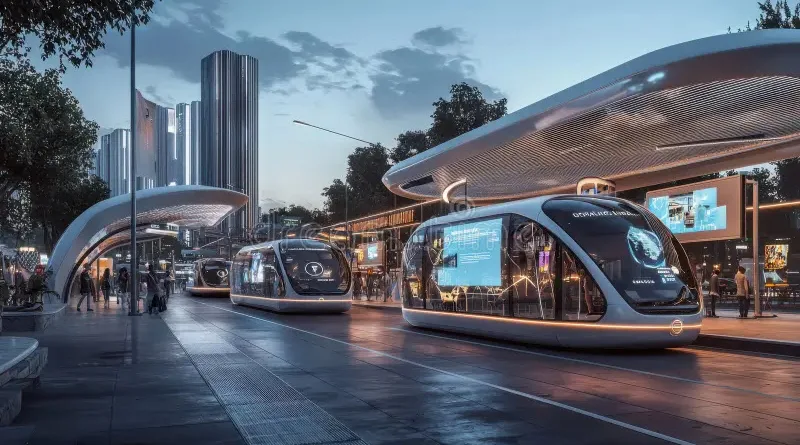
The Future of Transportation: How Technology Is Rewriting the Way We Move
The future of transportation is unfolding quietly, reshaping the way we move through intelligence, electrification, and a new vision of mobility.
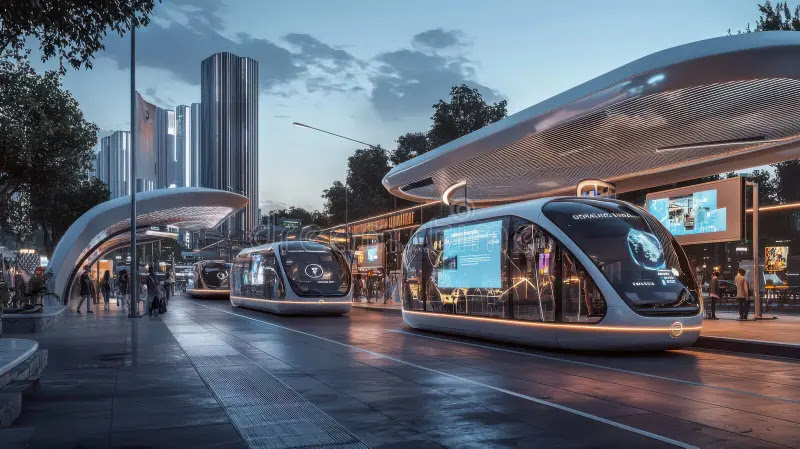
There is a quiet revolution unfolding in the way we move. Not the loud kind, not the kind that announces itself with grand declarations, but a slow, steady transformation that reshapes the world beneath our feet. Transportation is no longer just about getting from one place to another. It is becoming a living system—intelligent, adaptive, and deeply intertwined with the technologies that define our age.
For more than a century, mobility was mechanical. Engines roared, wheels turned, and roads stretched endlessly across landscapes built for speed rather than understanding. But today, the very idea of movement is being rewritten. Cars are learning to navigate without drivers. Cities are beginning to sense the flow of people and adjust themselves in real time. Aircraft are becoming quieter, cleaner, and more autonomous. Even the simple act of walking through a city is being transformed by invisible networks of data that guide, predict, and optimize our paths.
The future of transportation begins with intelligence. Not human intelligence, but the kind that emerges from algorithms, sensors, and interconnected systems. A car is no longer a machine; it is a node in a vast digital ecosystem. It perceives the world through cameras and lidar, interprets it through neural networks, and makes decisions in milliseconds. It communicates with other vehicles, with traffic lights, with the very infrastructure of the city. Movement becomes a conversation—fluid, dynamic, and constantly evolving.
But intelligence alone is not enough. The future of mobility is also electric. The hum of combustion is giving way to the quiet pulse of batteries and motors. Energy is no longer burned; it is stored, shared, and regenerated. Vehicles become part of the grid, feeding power back into the system when they rest, drawing from renewable sources when they move. The boundary between transportation and energy begins to blur, creating a world where mobility is not a burden on the planet but a partner in its renewal.
And then there is autonomy. The idea that a vehicle can navigate the world without human intervention once belonged to science fiction. Now it belongs to engineering. Autonomous systems learn from billions of miles of data, refining their understanding of roads, weather, behavior, and uncertainty. They do not get tired. They do not get distracted. They do not panic. They simply learn, adapt, and improve. In this shift, transportation becomes not just safer, but fundamentally different. The car stops being a tool and becomes a companion—silent, attentive, and endlessly patient.
Yet the most profound transformation is not technological. It is human. As mobility evolves, so do our cities, our habits, our expectations. Streets once dominated by cars begin to open for pedestrians and cyclists. Public transit becomes smarter, more responsive, more humane. The distance between home and work, between people and opportunity, begins to shrink. Mobility becomes a form of freedom—not the freedom of speed, but the freedom of access.
The future of transportation is not a single invention or a single breakthrough. It is a tapestry woven from countless threads: artificial intelligence, electrification, automation, connectivity, sustainability. Each thread strengthens the others, creating a system that is more than the sum of its parts. A system that learns. A system that adapts. A system that breathes.
And as this new world emerges, we find ourselves at the edge of a profound shift. Movement is no longer just physical; it is informational, environmental, and deeply personal. The vehicles we build reflect not only our engineering but our values. The cities we design reflect not only our needs but our imagination. The future of transportation is not about machines—it is about the kind of world we want to live in.
In the quiet hum of an electric motor, in the soft glow of a sensor scanning the road, in the invisible exchange of data between a vehicle and a city, we can already hear the future approaching. It is not loud. It is not dramatic. But it is inevitable. And it is rewriting the way we move, one silent revolution at a time.