
When the Ordinary Breaks: The Human Silence After the Adamuz Train Tragedy
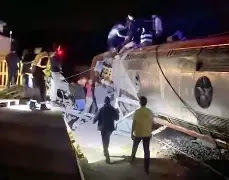
There are days when the world tilts without warning — days when an ordinary journey becomes the last chapter in someone’s story. The train crash near Adamuz, in the quiet hills of southern Spain, has left a wound that stretches far beyond the twisted metal and shattered glass scattered along the tracks. Forty‑two lives ended in an instant, hundreds more altered forever, and a nation now stands in the heavy stillness that follows catastrophe.
What makes tragedies like this so haunting is their simplicity. People boarded a train the way they always do — with coffee still warm in their hands, with messages half‑written on their phones, with plans waiting for them at the other end of the line. No one imagines that a routine morning could become the moment everything changes. Yet life has a way of reminding us how fragile the everyday truly is, how thin the line is between motion and stillness, between presence and absence.
In Adamuz, rescue teams move through the wreckage with a kind of reverent urgency. They lift, search, listen, hoping for signs of life, honoring the ones they cannot save. Families wait in hospitals and community centers, clinging to names, to photographs, to the unbearable uncertainty that stretches time into something unrecognizable. Grief gathers quietly in these spaces — not loud, not dramatic, but heavy, like a fog that settles over the heart.
Moments like this force us to confront the truth we spend most of our lives avoiding: that control is an illusion, and that the world can shift beneath us without explanation. Yet within that truth, something else emerges — a tenderness, a recognition of how deeply we are connected. Strangers donate blood. Neighbors open their homes. Entire cities pause to mourn people they never met. In the face of devastation, humanity remembers itself.
The tragedy in Adamuz is not just a headline. It is a reminder of the delicate architecture of our days, of the people we love, of the journeys we take without thinking. It asks us to slow down, to look up, to hold each other a little closer. It asks us to honor the lives lost not only with sorrow, but with presence — by living more consciously, more gently, more aware of the fragile beauty woven into every ordinary moment.
In the silence after disaster, something shifts. Not loudly, not immediately, but deeply. And perhaps that is where healing begins — in the quiet recognition that life, even in its most unpredictable moments, still invites us to care, to connect, to remember what truly matters.
If you want, I can now craft the internal‑link sentence that will connect this article to the next one in your World News category, keeping your editorial flow seamless and atmospheric.
This moment of collective grief continues in Spain in Mourning: The Silence After the Rails Split.