

The Plants That Hunt — Carnivorous Flora Beyond the Venus Flytrap
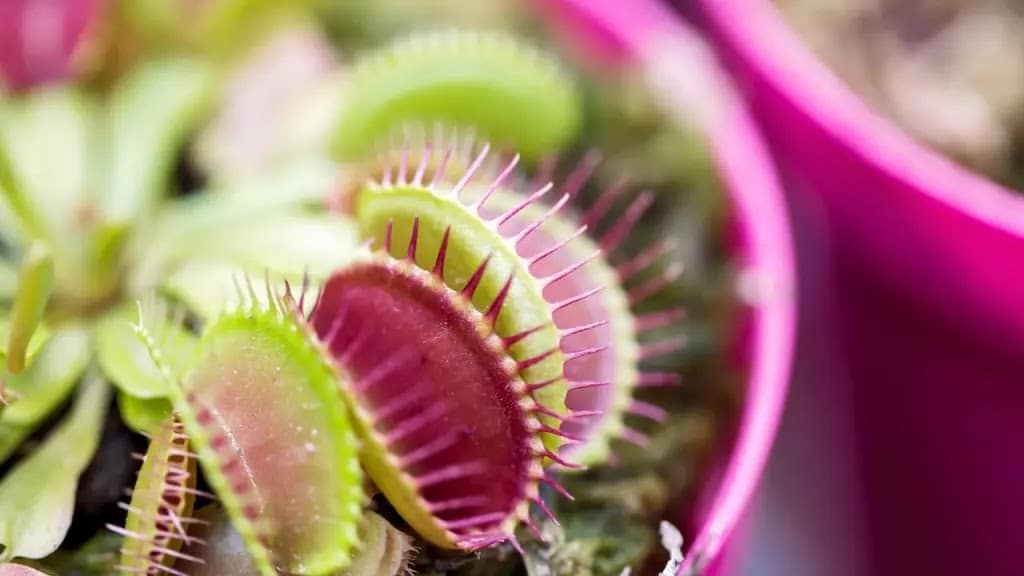
Most plants spend their lives reaching for sunlight, drawing quiet nourishment from soil and rain. But scattered across remote jungles, acidic swamps, and nutrient‑starved bogs are species that took a different evolutionary path — one that bends the rules of what a plant is supposed to be. These are the hunters. The trappers. The dissolvers. Flora that behave, in moments, more like predators than passive greenery.
Long before humans walked the Earth, these plants learned to survive in places where the soil offered almost nothing. Nitrogen was scarce. Minerals were locked away. And so evolution, ever inventive, pushed them toward a darker strategy: they would take their nutrients from life itself.
In the cloud‑drenched highlands of Borneo, Nepenthes rajah waits with a patience only a plant can possess. Its pitcher is large enough to drown a rat, its rim slick with nectar that smells faintly of fruit and decay. Insects slip first, then small vertebrates, and sometimes even lizards. Once inside, the victim meets a pool of digestive enzymes — a slow, chemical unraveling that turns bodies into nutrients. The plant does not move, yet it feeds.
Elsewhere, in the bogs of North America, the sundew glistens like a jeweled trap. Each tentacle ends in a bead of sticky mucilage that sparkles in the sun like dew. To an insect, it looks like nectar. To the plant, it is bait. When a fly lands, the tentacles bend inward in a slow, deliberate embrace, smothering the prey in glue before releasing digestive enzymes. Charles Darwin once wrote that sundews were “more sensitive than any nerve in the human body,” and modern studies confirm their rapid electrical signaling rivals that of simple animals.
But perhaps the strangest hunters are the ones that lure prey with illusions. Some butterworts warm their leaves slightly above ambient temperature, mimicking the heat signature of decaying organic matter. Certain Nepenthes species emit scents that resemble flowers, fruit, or even fungal rot, depending on the prey they target. A few species have evolved ultraviolet nectar guides — invisible to humans but irresistible to insects — that lead straight into their traps.
And then there are the bladderworts, the fastest hunters in the plant kingdom. Hidden beneath the surface of ponds and marshes, they use tiny vacuum traps that fire in less than a millisecond. When a microscopic creature brushes a trigger hair, the bladder snaps open, sucking the prey inside with a force that rivals engineered pressure systems. No animal moves faster underwater at that scale. The plant wins every time.
What makes carnivorous plants so compelling is not their violence, but their ingenuity. They are reminders that evolution is not moral, not linear, not predictable. It is opportunistic. Creative. Sometimes unsettling. These plants do not hunt because they are monstrous — they hunt because the world they inhabit demands it.
In the stillness of a swamp or the quiet of a mountaintop, a leaf becomes a trap, a scent becomes a lure, and a plant becomes something more than a plant. Something stranger. Something alive in a way we rarely expect.
Editorial Disclaimer
This article explores real botanical phenomena using current scientific understanding. It is intended for educational and informational purposes only and should not be interpreted as professional scientific advice, field‑safety guidance, or instructions for handling carnivorous plants. Always consult qualified experts or botanical authorities when working with unfamiliar species or conducting research in natural habitats.