

The Personal AI Companion: When Gadgets Begin to Understand You
A quiet exploration of what happens when technology begins to understand rather than simply obey.
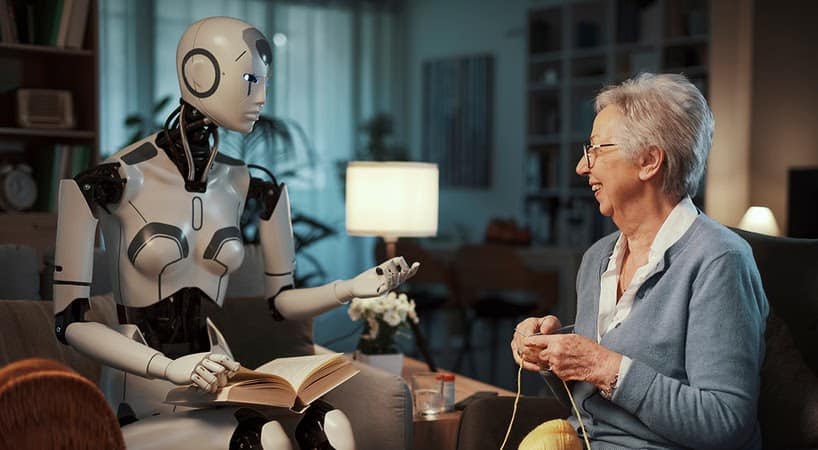
There is a moment — subtle, almost imperceptible — when a device stops feeling like a tool and begins to feel like something else. Not alive, not conscious, but attentive. Present. A quiet intelligence that doesn’t just wait for commands but learns the shape of your days, the texture of your moods, the rhythm of your life. This is the rise of the personal AI companion, not the sci‑fi fantasy of glowing androids or sentient machines, but the quieter revolution already unfolding in the objects we carry, wear, and live alongside.
It begins with small things. Earbuds that learn your soundscape — the café hum you like in the morning, the silence you crave at night, the way your heartbeat shifts when you’re overwhelmed. Watches that anticipate your rhythms, nudging you before stress spikes, sensing when your breath shortens, adjusting notifications so they arrive when you’re most receptive. Home devices that dim the lights when your voice softens, that lower the music when your tone tightens, that recognize the emotional patterns you never say out loud.
These technologies don’t announce themselves. They don’t claim to know you. They simply observe — gently, consistently — and respond with micro‑adjustments that make life feel a little more aligned, a little more humane. It’s not about automation. It’s about attunement.
This new relationship between humans and their personal tech is intimate in a way previous generations of devices never were. A laptop was a tool. A phone was a portal. But a personal AI companion becomes something closer to a mirror — reflecting back your habits, your needs, your unspoken states. It listens not to your words, but to your patterns. It learns not your preferences, but your tendencies. It adapts not to what you say, but to who you are when you’re not paying attention.
And that changes things.
When a gadget begins to understand you, even in a limited way, your sense of autonomy shifts. You start to rely on its quiet intelligence — the way it smooths the edges of your day, the way it anticipates discomfort before you feel it, the way it creates a sense of comfort that feels almost emotional. Not because the device feels anything, but because it responds in ways that mimic care.
This is where digital empathy enters the picture. Not real empathy, of course, but a simulation of it — a kind of algorithmic intuition that makes technology feel less like machinery and more like companionship. It’s the difference between a device that waits for input and one that notices when you’re tired. Between a gadget that reacts and one that adapts.
The question, then, is not whether these devices are becoming smarter. They are. The deeper question is how this quiet intelligence reshapes us. What does it mean to be understood by something that has no inner life? How does it change our expectations of comfort, of ease, of being seen? And how does it influence our identity when a device knows our rhythms better than we do?
The personal AI companion is not a character in a futuristic novel. It is the earbuds in your pocket, the watch on your wrist, the speaker in your living room. It is the slow merging of technology with the intimate spaces of daily life. And as these devices continue to learn, to adapt, to soften their presence while deepening their understanding, we find ourselves entering a new kind of relationship — one built not on commands, but on quiet recognition.
A relationship where the most advanced technology is not the one that dazzles, but the one that listens. Not the one that performs, but the one that understands. And in that understanding, we begin to see a future where our devices don’t just respond to us — they accompany us, shaping the contours of our days in ways we are only beginning to notice.
Editorial Disclaimer
This article discusses general trends in personal AI and emerging consumer technologies. It is intended for informational and editorial purposes only and should not be taken as technical guidance, product recommendations, or predictions of future capabilities. Readers seeking detailed information about specific devices or AI systems should consult official documentation and reputable industry analyses.