

The Gene That Changed the Fate of Humanity
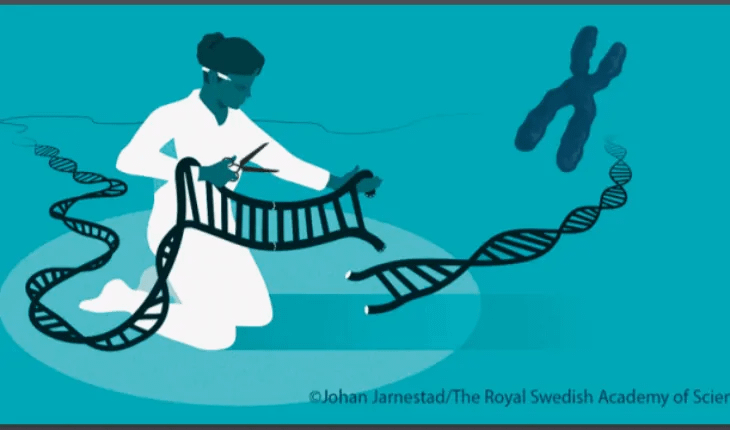
Long before cities rose, before stories were carved into clay or sung beside firelight, something quiet happened inside the genome of an early human. A tiny molecular shift — just two amino‑acid changes in a single gene — altered the trajectory of our species. That gene is FOXP2, often called “the language gene,” though its influence is subtler and far more profound than that nickname suggests. It did not give us grammar overnight, nor did it suddenly make our ancestors eloquent. But it opened a door.
FOXP2 is a transcription factor, a kind of molecular conductor that guides the activity of other genes during brain development. In most mammals, it shapes circuits involved in vocalization, motor control, and learning. Birds rely on it to learn songs. Mice use it to coordinate ultrasonic calls. But in humans, FOXP2 carries a distinctive signature — a pair of mutations that appeared after our lineage split from that of Neanderthals and Denisovans. Those small changes seem to have fine‑tuned neural pathways involved in breath control, articulation, and the rapid sequencing of sounds.
In other words, FOXP2 didn’t create language, but it made the machinery of language possible.
The story becomes clearer when we look at what happens when FOXP2 is disrupted. Families with rare mutations in this gene struggle with speech production, grammar, and the fluid coordination of mouth and tongue movements. Their intelligence remains intact, but the bridge between thought and vocal expression becomes fragile. This vulnerability hints at what FOXP2 contributed to our ancestors: not vocabulary or syntax, but the neural precision required to turn complex ideas into sound.
Imagine early humans before this shift — capable of communication, yes, but limited in speed, nuance, and control. Then imagine the first individuals carrying the altered FOXP2 variant. Their voices could shape more intricate patterns. Their groups could coordinate hunts, share knowledge, teach skills, and pass stories across generations with new clarity. Culture began to accumulate. Memory stretched beyond a single lifetime. The species changed.
FOXP2 is not the whole story of language — far from it. Human speech depends on a constellation of genes, brain regions, and cultural evolution. But FOXP2 sits at a pivotal crossroads, a molecular hinge on which the door to symbolic communication began to swing open.
A tiny mutation, a subtle shift in timing and neural wiring, and suddenly a species found its voice.
From that voice came myth, mathematics, diplomacy, poetry, law, music, and every fragile or magnificent idea we have ever shared. FOXP2 didn’t write the story of humanity, but it gave us the ability to tell it — and in doing so, it changed our fate forever.