
A Strange Supernova May Solve a Major Cosmic Mystery — A New Light in the Dark
.jpg)
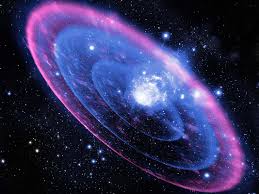
Every so often, the universe offers a clue so unexpected that it forces astronomers to stop, stare, and reconsider what they thought they understood. The latest of these clues arrived in the form of a supernova—brilliant, distant, and profoundly strange. It erupted like any dying star would, but the light it released, the way it faded, and the fingerprints it left behind in its spectrum did not match any known category. Instead, it hinted at something deeper, something that could help unravel one of the most persistent mysteries in cosmology.
Supernovae are more than explosions; they are tools. For decades, Type Ia supernovae have served as cosmic mile markers, helping scientists measure the expansion of the universe. Their predictable brightness made them the rulers of cosmic distance. But this new supernova refuses to follow the rules. Its luminosity is off. Its chemical signatures are unusual. Its evolution over time bends away from the familiar patterns that have shaped our understanding of cosmic history.
At first, astronomers thought it might be an outlier, a rare accident of stellar evolution. But as the data accumulated, a different possibility emerged—this supernova might represent a missing piece in the puzzle of how stars die and how the universe expands. Its properties suggest a new kind of progenitor system, one that could bridge the gap between theoretical models and the messy reality of stellar physics. It may even explain why some supernovae appear brighter or dimmer than expected, a discrepancy that has long complicated measurements of cosmic acceleration.
The implications ripple outward. If this strange supernova belongs to a previously unrecognized class, it could reshape the calibration of cosmic distances. It could refine our estimates of how fast the universe is expanding. It could illuminate the nature of dark energy, the mysterious force driving that expansion. A single explosion, observed at the right moment, could shift the foundation of modern cosmology.
But beyond the equations and models, there is something poetic about this discovery. A star that lived and died billions of years ago is now whispering secrets across the void, offering insight into the fate of the universe itself. Its light traveled through cosmic dust, past galaxies and clusters, through the expanding fabric of spacetime, until it reached our telescopes and revealed a story no one expected.
The universe often hides its answers in the most violent events. This supernova, strange and luminous, may be one of those answers—a reminder that even in death, stars can illuminate the deepest mysteries of existence.