

The First Financial Scam in History: Hegestratos and the Bottomry Loan
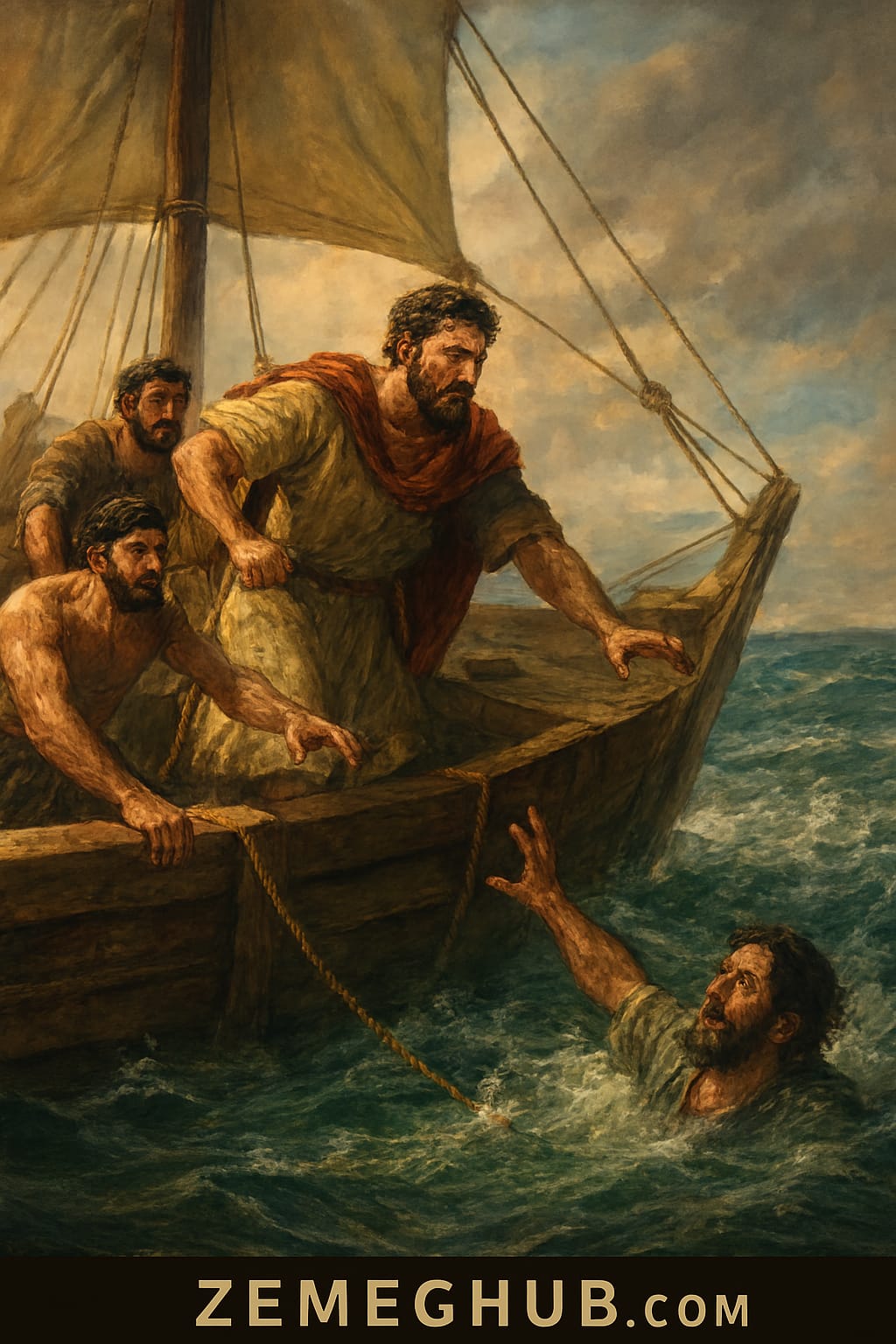
Commerce in the ancient Mediterranean was a dangerous but vital enterprise. Grain, olive oil, wine, and precious goods traveled across treacherous waters, feeding cities and empires. For merchants, every voyage was a gamble. Storms could rise without warning, pirates lurked along the coasts, and a single misfortune could ruin a man’s fortune. To manage this risk, the Greeks developed a clever financial instrument: the bottomry loan.
A bottomry loan was simple in principle but profound in its implications. A merchant borrowed money to fund his voyage, pledging his ship and cargo as collateral. If the vessel returned safely, the loan was repaid with interest. If disaster struck and the ship was lost, the lender claimed the wreck and its cargo. It was, in essence, an early form of marine insurance — a way to spread risk across society and keep trade flowing despite the hazards of the sea.
Into this system stepped Hegestratos, a Greek grain merchant whose name would be remembered not for his success in trade, but for his audacity in deceit. Around 300 B.C., Hegestratos took out a bottomry loan on his ship and its cargo. But instead of trusting the gods and the sea, he devised a scheme to cheat both lender and crew. His plan was bold: he would secretly sink his own ship, keep the valuable grain, and escape repayment. It was the earliest known attempt at insurance fraud.
The plot might have succeeded had it not been for human suspicion. The crew, seasoned sailors who knew the rhythms of the sea, began to notice irregularities. Whispers spread across the deck — why was the captain behaving strangely, why did he linger near the cargo hold, why did he seem more anxious than usual? Eventually, the truth surfaced: Hegestratos intended to scuttle the ship.
When confronted, panic erupted. The merchant tried to flee, abandoning his scheme and leaping into the dark waters. But the sea, which he had sought to manipulate, became his undoing. He drowned while attempting to escape, his body swallowed by the waves. His crew survived, his cargo was preserved, and his name entered history not as a successful trader, but as the first recorded fraudster.
The story of Hegestratos is more than a curious anecdote. It reveals something timeless about human nature. Wherever systems of trust and finance exist, there will be those who try to bend them for personal gain. Fraud is not a modern invention born of banks and computers; it is as old as commerce itself. The bottomry loan was designed to protect merchants from the dangers of the sea, but it also created an opportunity for deception — an opportunity Hegestratos could not resist.
His failure is instructive. It shows that fraud carries risks not only financial but existential. In trying to cheat the system, Hegestratos lost his life. His story reminds us that while financial instruments evolve — from bottomry loans to modern insurance policies, from paper contracts to digital transactions — the temptation to exploit them remains constant. And so does the need for vigilance.
From the decks of ancient Greek ships to the trading floors of today, the struggle between honesty and deceit continues. Hegestratos’s drowned body is a symbol of the oldest truth in commerce: that trust is fragile, and betrayal often ends in ruin.