

Death Is Not a Rebate”: A Meditation on Finality, Value, and the Illusion of Return
We live in a transactional world. Every action, every sacrifice, every moment of pain is often weighed against what we expect to receive in return. We endure heartbreak for growth. We suffer for wisdom. We invest time for success. And somewhere in that logic, we begin to believe that life itself is a ledger—one where loss will eventually be balanced by gain.
But death breaks that illusion.
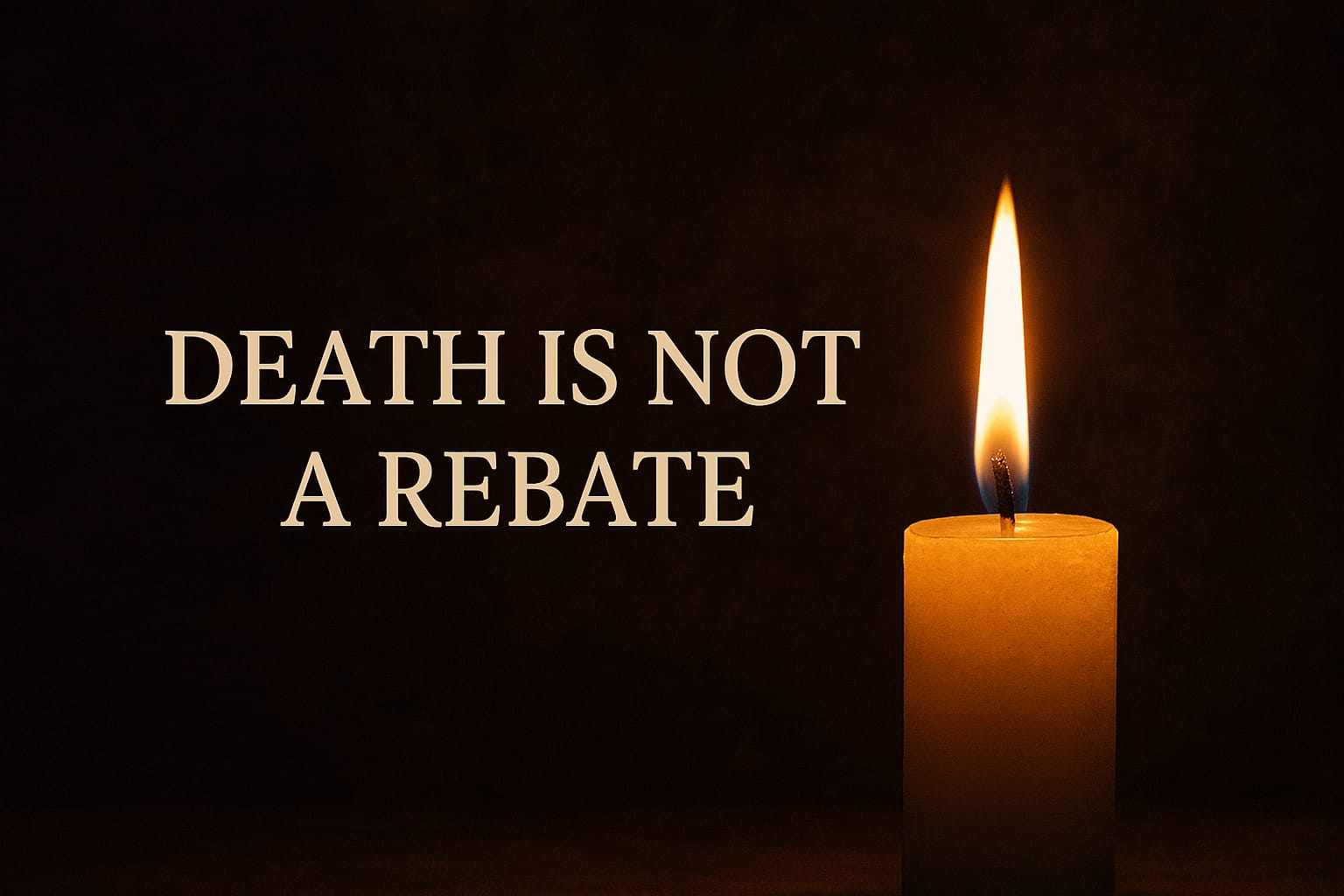
“Death is not a rebate.” It’s not a refund for the years we gave. It’s not a compensation for the suffering we endured. It doesn’t return what was taken, nor does it offer closure in the form of reward. It is, in its starkest truth, the end of the transaction.
Across cultures and philosophies, there’s a persistent hope that life is fair. That karma, fate, or divine justice will ensure that good deeds are rewarded and pain is repaid with peace. But death doesn’t follow those rules. It arrives for the kind and the cruel, the young and the old, the fulfilled and the unfinished.
We want to believe that those who suffered will be compensated. That those who gave everything will be remembered, honored, repaid. But death doesn’t issue receipts. It doesn’t tally the score. It simply closes the account.
And that’s where the discomfort lies. Because if death isn’t a rebate, then what is the value of all we’ve endured?
Science, Medicine, and the Fight Against Finality
In medicine, we fight death with everything we have. We develop therapies, invent machines, and decode genomes—all in the hope of delaying the inevitable. And while science has extended life, improved its quality, and even reversed some forms of decay, it has not—and cannot—offer a rebate.
A successful surgery doesn’t erase the trauma of illness. A remission doesn’t refund the years spent in fear. Even the most miraculous recovery is not a return—it’s a continuation. And that distinction matters.
Because when we frame healing as a transaction, we risk misunderstanding its purpose. Medicine isn’t about restoring what was lost—it’s about preserving what remains. It’s about honoring life, not bargaining with death.
Spirituality and the Search for Meaning
In spiritual traditions, death is often seen as a transition—a doorway, a return to source, a merging with the eternal. And while these beliefs offer comfort, they don’t negate the truth of the phrase. Even in reincarnation, even in ascension, death is not a rebate. It doesn’t undo the past. It doesn’t refund the pain. It transforms, but it doesn’t compensate.
This realization invites a deeper kind of peace. One that doesn’t rely on cosmic fairness, but on personal meaning. If death won’t repay us, then we must find value in the living. In the moments of connection, creation, and courage that define our days.
Legacy: The Only Echo We Leave
If death is not a rebate, then legacy is not a receipt—it’s a ripple. The stories we tell, the kindness we offer, the truths we share—these are the echoes that remain. They don’t refund our lives, but they extend them. Not in time, but in impact.
A teacher’s wisdom lives on in a student’s choices. A parent’s love shapes generations. An artist’s work stirs souls long after the brush has dried. These legacies aren’t rebates—they’re gifts. Unquantifiable, unreturnable, and deeply human.
To live with the understanding that death is not a rebate is to live without expectation of return. It’s to give because giving matters. To love because love transforms. To endure because endurance reveals who we are.
It’s a radical shift—from transactional living to intentional being. From waiting for compensation to creating meaning. From fearing the end to honoring the now.
And in that shift, we find something extraordinary: a life that doesn’t need to be refunded, because it was never wasted.