

Breakthroughs in 2D Materials and Quantum Biology: How 2025 Is Rewriting the Rules of Innovation
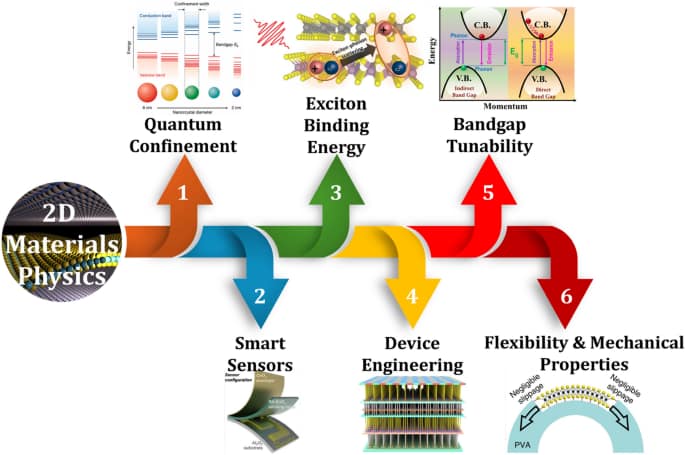
In October 2025, science and technology are converging in ways that feel almost cinematic—ushering in a new era of ultra-thin materials, quantum-enhanced biology, and energy systems that mimic nature itself.
At the heart of this transformation is a quiet revolution in 2D materials, those atom-thin layers of carbon, boron, and transition metals that behave like nothing else on Earth. While graphene has long been the poster child of this field, 2025 is witnessing a surge in new contenders—materials that bend light, conduct electricity with zero resistance, and even store hydrogen like a sponge.
This month, researchers from Khalifa University and the Max Planck Institute are co-hosting a symposium in Dresden focused entirely on these materials in action. The event isn’t just academic—it’s a launchpad for real-world applications: next-generation batteries, solar cells, hydrogen storage, and lightweight composites for electric vehicles and aerospace. These aren’t distant dreams; they’re prototypes being tested in labs across Europe and the UAE.
Quantum Biology: The New Frontier of Life Sciences
Meanwhile, another field is quietly exploding—quantum biology. Long dismissed as speculative, it’s now gaining traction thanks to advances in quantum computing and molecular imaging. In 2025, scientists have begun to decode how quantum effects influence photosynthesis, enzyme reactions, and even bird navigation. These discoveries are not just intellectually thrilling—they’re practical.
Imagine solar panels that mimic the quantum efficiency of plant leaves. Or cancer treatments that exploit quantum tunneling to target cells with surgical precision. These aren’t science fiction—they’re being modeled and simulated today, thanks to quantum processors that can handle the chaotic complexity of biological systems.
CRISPR 3.0 and Synthetic Biomaterials
Gene editing is also entering a new phase. While CRISPR has been a household name for years, 2025 introduces CRISPR 3.0—a suite of tools that combine prime editing, base editing, and AI-guided precision. The result? Therapies that can rewrite DNA with near-perfect accuracy and minimal side effects.
In parallel, synthetic biology is crafting biomaterials that mimic skin, muscle, and even neural tissue. These materials are being used to build prosthetics that feel, respond, and heal—blurring the line between biology and engineering.
Energy Systems Inspired by Nature
Perhaps the most poetic development of 2025 is the rise of bio-inspired energy systems. Engineers are designing batteries that mimic the way trees store nutrients, and hydrogen cells that replicate the metabolic cycles of microbes. These systems are not only efficient—they’re sustainable, scalable, and resilient to environmental stress.
A Year of Convergence
What makes 2025 extraordinary is not just the pace of innovation, but its interconnectedness. Quantum computing is accelerating biology. AI is guiding material science. And nature itself is becoming the blueprint for our most advanced technologies.
This is not just a year of breakthroughs—it’s a year of synthesis. And for scientists, engineers, and visionaries alike, it’s a moment to reimagine what’s possible.