

A Quantum Leap in Mathematics: The New Formula for Pi Redefines Scientific Possibilities
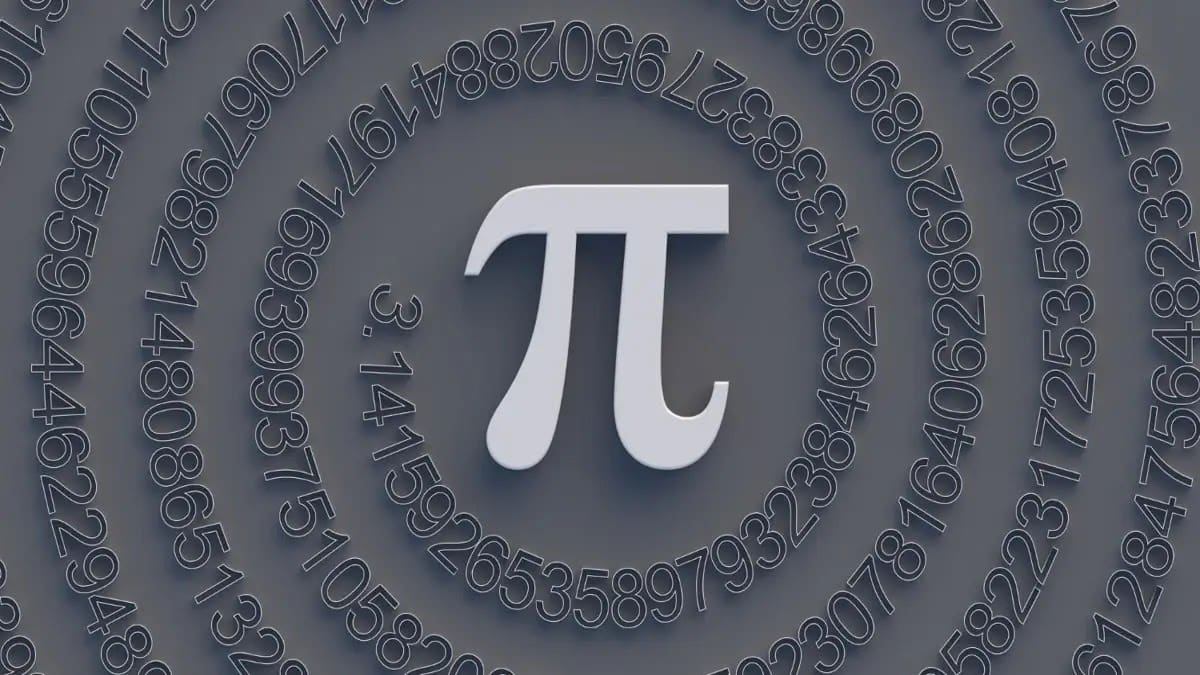
In a groundbreaking development that’s stirring excitement across the scientific community, physicists Arnab Priya Saha and Aninda Sinha have unveiled a new formula for π (pi)—the mathematical constant that has fascinated scholars for millennia. This isn’t just another incremental improvement in numerical approximation. It’s a conceptual breakthrough that bridges quantum mechanics and mathematical theory, offering a more elegant and efficient representation of one of the most fundamental constants in science.
QThe Eternal Enigma of Pi
Pi, the ratio of a circle’s circumference to its diameter, is an irrational number that stretches into infinity without repeating. For centuries, mathematicians have sought better ways to approximate it. From Archimedes’ polygonal methods to Madhava’s infinite series, each generation has added a layer of understanding. Yet, despite its ubiquity in geometry, physics, and engineering, pi remains elusive in its full precision.
Traditional approximations like 22/7 or 3.14159 are useful for everyday calculations, but they fall short in high-precision scientific applications. In fields like quantum physics and particle modeling, even the tiniest deviation can lead to significant errors. That’s where the new formula comes in.
A Fusion of Quantum Mechanics and Mathematical Elegance
The new formula emerged from an effort to simplify particle interaction models using principles from quantum mechanics. Saha and Sinha combined two powerful tools: the Feynman diagram, which visualizes particle scattering, and the Euler beta function, a staple in string theory. The result is a series—a structured set of mathematical terms—that converges rapidly to the value of pi.
Unlike older series that require billions of terms to reach high precision, this new representation achieves remarkable accuracy with far fewer steps. That efficiency is a game-changer for computational physics, where time and processing power are precious commodities.
Why This Matters Beyond Mathematics
The implications of this discovery extend far beyond the realm of pure math. In quantum computing, for instance, algorithms often rely on constants like pi to simulate particle behavior. A faster, more accurate formula means simulations can run more efficiently, potentially accelerating research in fields ranging from cryptography to materials science.
In digital media, rendering realistic graphics—such as those in high-end video games or cinematic CGI—requires complex calculations involving pi. The new formula could streamline these processes, reducing rendering times and improving visual fidelity.
Even in artificial intelligence, where models are trained using vast datasets and intricate mathematical frameworks, a more optimized representation of pi could enhance performance and reduce energy consumption.
A Nod to the Past, A Step Into the Future
Interestingly, the new formula echoes the work of ancient mathematicians like Madhava, whose series for pi laid the groundwork for modern calculus. By revisiting and refining these historical ideas through the lens of quantum theory, Saha and Sinha have demonstrated the timelessness of mathematical inquiry.
Their work also highlights the importance of interdisciplinary collaboration. By merging physics and mathematics, they’ve not only solved a technical problem but also opened new avenues for exploration. It’s a reminder that innovation often arises at the intersection of disciplines.
While the formula is still being tested and refined, its potential is undeniable. Peer-reviewed and published in a leading scientific journal, it has already sparked interest among researchers worldwide. Future studies will likely explore its applications in other areas of science and technology, and perhaps even uncover deeper connections between mathematical constants and the fabric of reality.
In a world increasingly driven by data and computation, the discovery of a new formula for pi is more than a mathematical curiosity—it’s a beacon of progress. It challenges us to rethink what we know, embrace complexity, and continue the quest for understanding that defines human ingenuity.
As we stand on the shoulders of giants, this new formula reminds us that even the most familiar constants can still surprise us. And in that surprise lies the essence of scientific discovery.